
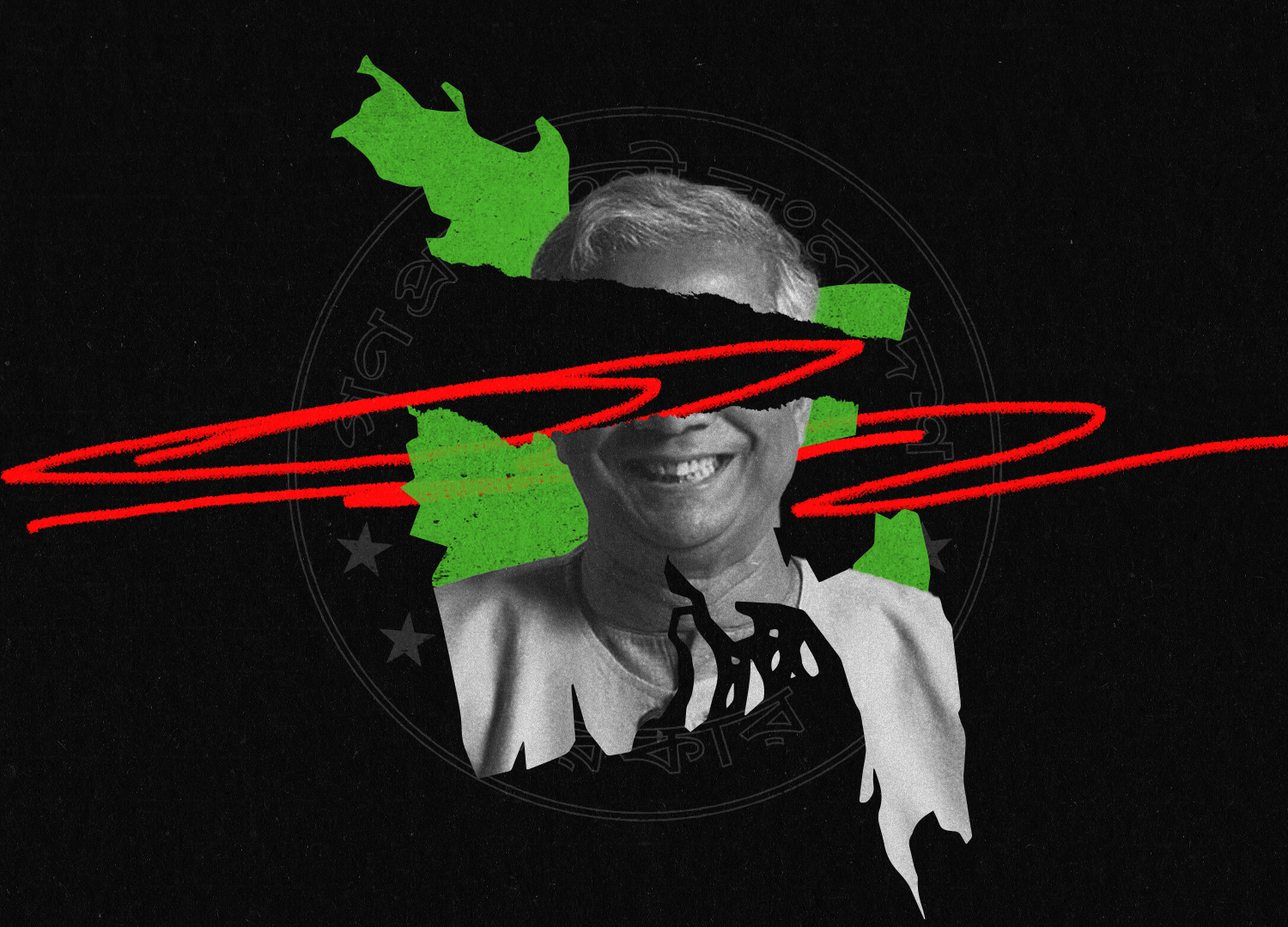
Every day in the year since Sheikh Hasina, famous for her boast about never fleeing, did, indeed, flee, has been quantifiably better than her fifteen and a half-year rule. Setting the bar at Bangladesh’s low point treats its citizens with the disdain that Muhammad Yunus showed for them as their representative at Chatham House, ahead of receiving yet another personal bauble that makes no difference to the state whose officials busied themselves lauding him. Bangladeshis deserve better than the worst – but even by that measure, the interim government has overstayed its welcome.
Yunus has never enjoyed a fraction of the popularity among Bangladeshis that his sycophants take turns to project to and impose on the world. Too proud to acknowledge, let alone admit this, his solution as the head of a government that has had to set a broken constitution aside, has been to rule by delegating the bureaucracy and the justice process to petty partisans, law enforcement to the military, and political ideology to the religious far right. The result has been a government that proudly violates human rights, and confidently uses the autocratic foundations of its predecessor that it purports to reform. Accountability and justice – and a sustainable system for them – have been rendered unattainable.
Yunus has never been a great political thinker, much less a great political actor. Nevertheless, parsing his pontifications on the subject of politics makes one thing irrefutably clear: he is a firm believer in women’s rights. He pronounced this as a political ideology on the pages of The Daily Star during his aborted attempt to launch a political party in 2007. By this one measure alone, he has failed as a leader when held accountable to his own promises. He lacks the courage of his convictions, and has wilfully given national platforms and prominence to misogynistic Islamism to be able to rule, leaving women vulnerable and their rights prone to regression.
Courage has never been Yunus’ strength. While he espouses rights for marginalised communities whenever he increases his carbon footprint to traverse the globe, he has historically failed to meaningfully speak up or work for the rights of Bangladesh’s indigenous, religious, gender and political minorities. Therefore, it should come as no surprise that, under his watch, these communities have been pushed further to the margins. When a leader can promote the disenfranchisement of his own people with the justification that they lack the sophistication to understand the nuances of electoral politics, perhaps it should not be expected that he respect and defend human rights.
An unelected, elitist chief adviser has spent a year buttressing his own cult of personality while arrogantly overseeing a government that enjoys undemocratic excesses, rather than corralling its members to serve the people with humility. Notwithstanding its greater appeal to certain Anglophone quarters, Bangladeshis are queasy about how much the immature Yunus tonic tastes like stale Hasina wine. Yunus, ensconced in his cocoon far removed from the people whose mandate he neither has nor seeks, has belatedly changed his tune. As his government celebrates its first anniversary, he has confirmed a commitment to holding a general election in the first half of February 2026. Good sense may yet prevail in Bangladesh.●
The article appeared in netra.news