
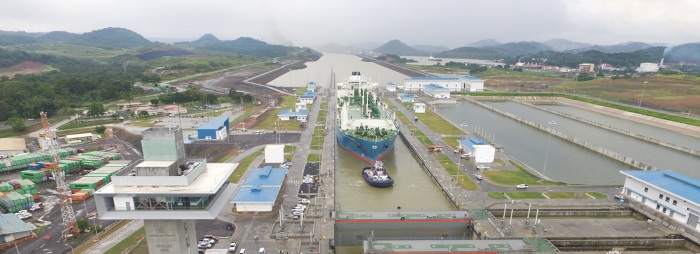
Hutchison Ports, a unit of CK Hutchison, has managed terminals in Balboa and Colon – on opposite ends of the trade channel – since the 1990s.
Panama’s “Vision 2025–2035” strategy sets out four priorities: a new reservoir on the Indio River, a 76km (47-mile) pipeline for liquefied petroleum gas, new container terminals and the expansion of logistics corridors.
Canal administrator Ricardo Vazquez Morales said the projects aim to keep the route competitive and aligned with global trade shifts.
Vazquez pointed to rising flows of propane, butane and ethane exported from the US Gulf coast to China, Japan, South Korea, Vietnam and other Asian destinations.
Demand for such energy products is expected to double within ten years, he said, warning that Panama could lose business to rival routes without new capacity.
The administrator also added that China’s entry into the World Trade Organization had anchored globalisation and shaped traffic for decades, a pattern “now under strain from trade disputes”.
As an example, he cited a recent surge in shipments from Asia to the US as companies rushed to move goods ahead of new tariffs announced by Trump in the first few months of his second term as president.
The volatility of the markets is such that it is highly unpredictable what will happen tomorrow,” Vazquez said. “That uncertainty makes it essential for the canal to expand its capacity and remain competitive.”
The plan was presented as the canal’s neutrality faces renewed scrutiny. Minister for Canal Affairs Jose Ramon Icaza called neutrality “a global value” and said the waterway will continue to serve all nations “without discrimination”.
At the same time, CK Hutchison is seeking to sell stakes in more than 40 terminals worldwide in a US$22.8 billion deal with a consortium led by BlackRock and MSC. Beijing has pressed for a mainland investor to join the sale, adding to scrutiny in Panama.
Asked whether Chinese or other state-linked companies would be allowed to compete for new terminal concessions, Vazquez declined to name specific countries.
“The selection criteria have not yet been defined,” he said. “The administration will present them to the board of directors, and they will decide.”
Vazquez argued that Panama should act quickly while global attention remains fixed on the canal. “In the past six or seven months, Panama has been highlighted as an international logistics hub,” he said.
“All the discussion about ports, all the talk about transport methods, from BlackRock to what we see today, points to the fact that we are a nerve centre of trade,” he added. “Panama is in the media, it is in the conversation, and this window of opportunity cannot be missed.”
The article appeared in scmp