
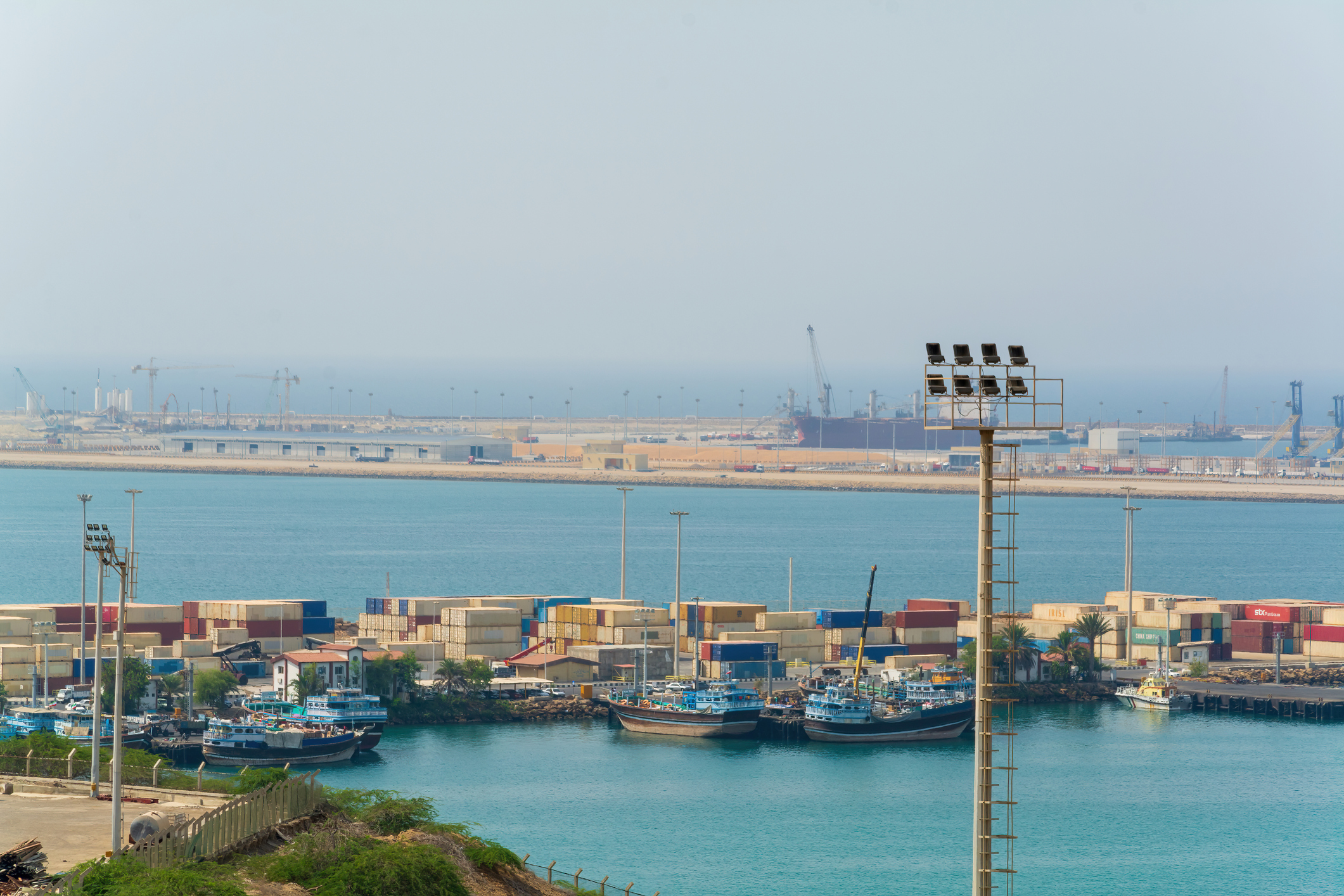
The U.S. decision to withdraw the sanctions exemption on Iran’s Chabahar Port is more than a regulatory setback for India. It represents a major disruption to one of New Delhi’s most ambitious connectivity projects — a project designed to bypass Pakistan, link India with Afghanistan and Central Asia, and eventually extend trade corridors to Russia and Europe. For India, Chabahar has never been just about shipping containers; it has been about geostrategy, regional leverage, and autonomy in foreign policy.
Located near Iran’s border with Pakistan, Chabahar was conceived as India’s answer to the limitations imposed by geography. Pakistan’s refusal to grant transit access forced India to find alternative routes to Afghanistan and beyond. Chabahar, integrated with the International North-South Transport Corridor (INSTC), promised to shorten trade routes to Eurasia by thousands of kilometers while offering cheaper costs compared to traditional maritime routes through the Suez Canal.
For Indian exporters, particularly those seeking entry into Central Asia’s largely untapped markets, Chabahar was the cornerstone of a long-term trade vision. It was also positioned as a counterbalance to China’s investments in Pakistan’s Gwadar Port, just 170 kilometers away. Strategically, it provided India with a foothold in Iran and allowed greater engagement with landlocked Afghanistan.
The U.S. State Department’s announcement that the exemption will end on September 29 has left New Delhi scrambling. For years, Washington had carved out Chabahar as a special case, recognizing its importance for Afghanistan’s development and India’s role as a stabilizing partner in the region. Revoking the waiver now — at a time of heightened tensions with Iran, Israel’s regional aggressiveness, and America’s recalibration in West Asia — signals that U.S. strategic priorities no longer align with India’s connectivity vision.
For India, the consequences are immediate and costly. Exporters now face uncertainty over whether Indian companies managing or investing in Chabahar will be subjected to third-party sanctions. The Federation of Indian Export Organisations (FIEO) has already voiced disappointment, warning that the disruption could curtail India’s access to new markets, weaken energy security, and reduce the effectiveness of the INSTC as a trade multiplier.
India now confronts a familiar dilemma: should it align with U.S. sanctions, or assert its policy of strategic autonomy by pressing ahead with Chabahar? Some former diplomats argue that India has no choice but to continue. The port is too vital to be abandoned, especially after New Delhi signed a 10-year operational agreement with Iran in May 2024, committing $120 million in investments and planning to raise an additional $250 million in debt. Backing out now would undermine India’s credibility as a reliable partner and forfeit years of effort.
Others warn that ignoring U.S. sanctions could expose Indian companies to penalties. The Iran Freedom and Counter-Proliferation Act (IFCA) has provisions to target individuals or entities dealing with Iran’s port operations. If enforced, this could complicate India’s financial transactions, shipping insurance, and even broader bilateral trade with the United States.
India’s predicament highlights the growing difficulty of balancing ties with Washington, Tehran, and Moscow in a polarized global order. The U.S. wants India as a strategic partner in the Indo-Pacific, but its sanctions regime limits India’s outreach in West Asia. Iran, despite its internal turmoil, remains central to India’s access to Central Asia and energy security. Russia, still a major partner in the INSTC framework, expects India to deepen connectivity projects that bypass Western-dominated trade routes. Chabahar thus sits at the intersection of India’s multi-alignment strategy — balancing its partnerships without surrendering autonomy. Backtracking on Chabahar could be seen as bowing to U.S. pressure, undermining India’s narrative as a rising power charting its own course.
India’s decision-making over Chabahar will need to weigh both risks and opportunities. Three potential paths stand out:
Go Ahead Despite Sanctions: India could press forward with Chabahar, calculating that the U.S. may avoid sanctioning Indian entities given the strategic importance of the India–U.S. relationship. This would demonstrate India’s resolve and preserve the credibility of its investments.
Seek a Diplomatic Understanding: New Delhi could leverage its partnership with Washington to negotiate a softer stance, possibly reviving exemptions under humanitarian or regional development grounds, as was the case earlier with Afghanistan.
Diversify Connectivity Plans: While Chabahar remains central, India may accelerate alternative projects like the India–Middle East–Europe Economic Corridor (IMEC). Yet, as experts note, IMEC remains years from materialization, while Chabahar is already functional.
The U.S. withdrawal of Chabahar’s sanctions waiver underscores the contradictions in India’s foreign policy environment. While Washington urges India to act as a counterweight to China, its punitive measures weaken India’s ability to compete strategically in its neighborhood. For New Delhi, Chabahar is not simply an economic project — it is a symbol of connectivity, autonomy, and regional presence. How India responds will determine whether it can hold its ground as a rising power capable of balancing great power rivalries or remain constrained by the strategic calculations of others. The port of Chabahar thus represents not just a logistical hub but a test case of India’s strategic resolve.