
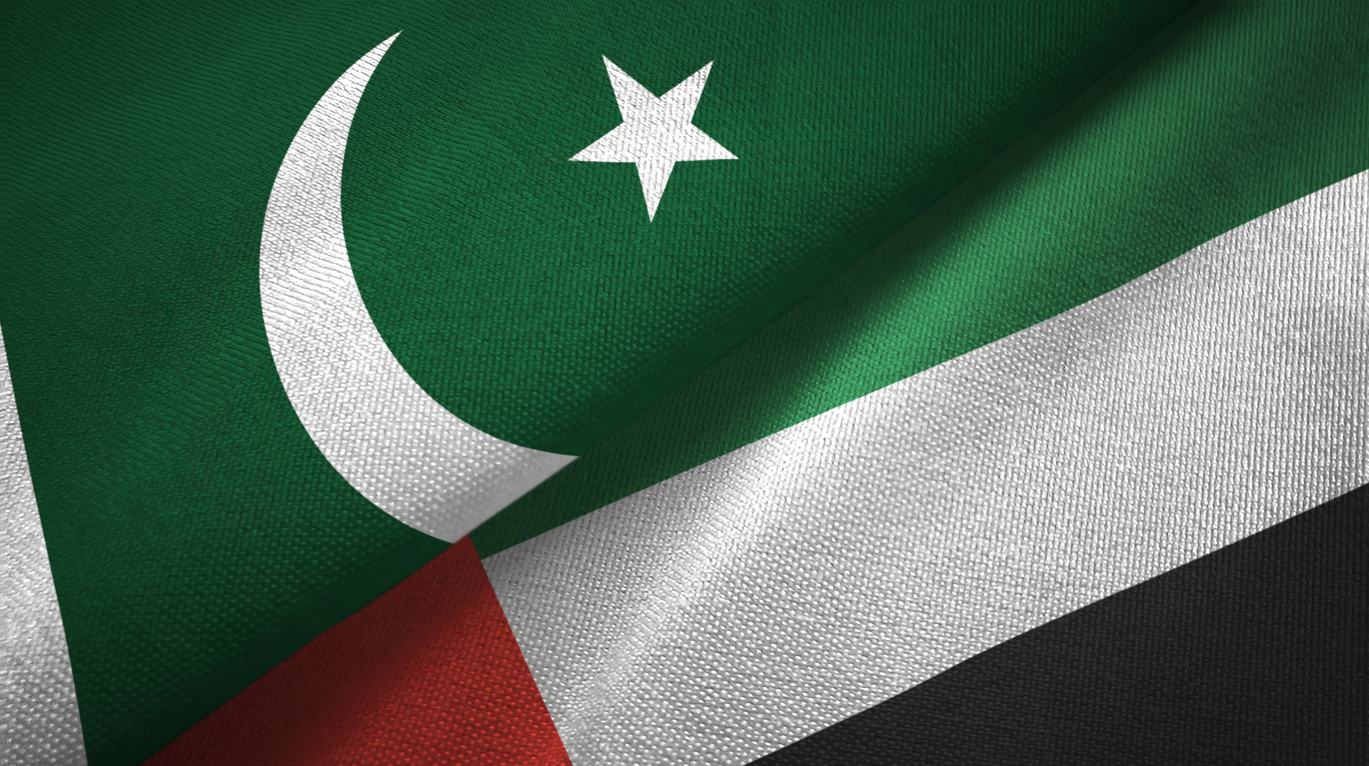
Pakistan’s Minister of State for Railways and Finance Bilal Azhar Kayani met with a UAE Minister of Energy and Infrastructure Suhail Mohamed Al Mazrouei, on October 3, 2025, in Abu Dhabi to discuss the cooperation on rail modernization and the connectivity between the both regions. Both countries reiterated their commitment to working together to create a modern, efficient, and sustainable transport network. The meeting took place on the sidelines of the Global Rail Infrastructure Conference and Exhibition, which was held from September 30 to October 2, bringing together transport ministers, policymakers, and industry leaders from around the world to shape the future of rail and infrastructure.
Pakistan and the UAE have signed an agreement granting access to the UAE’s modernized railway network, strengthening bilateral connectivity and cooperation. This agreement signifies a turning point in the collaboration of both countries and the regional economic growth that is to be achieved in the long run. Rail connection between the two countries will not only increase trade and investment but also make it possible for the vicinity to cooperate more closely through South Asia and the Gulf. The modern Buyer’s railroad projects of Pakistan such as Main Line-1 (ML-1) and Main Line-3 (ML-3) will act as the major points of trade and logistics for the country, thus minimizing cost, enhancing efficiency, and paving the way for sustainable economic growth.
While the economic gains from this collaboration are significant, it equally reflects a shared vision for sustainable development and innovative, environmentally responsible transport solutions. The two nations are showing a good example for the whole region to follow by embracing green and sustainable practices in the design and operation of their infrastructures. Moreover, the initiative places Pakistan and the UAE at the forefront of regional connectivity and infrastructure development thus expanding the transport sector’s opportunities for job creation, technology transfer and skill enhancement which are the key ingredients for inclusive and future-oriented growth.
Historically, the relationship between Pakistan and the United Arab Emirates traces back to 1971, when Pakistan became the first country to recognize the newly established UAE; a gesture that reflected deep solidarity between two Muslim-majority nations bound by shared values, cultural ties, and a common vision for progress. One of the major architects of this fondness was late Sheikh Zayed bin Sultan Al Nahyan, the ruler of UAE, who by facilitating political as well as economic and humane relations between the two countries made cooperation that went beyond politics. This alliance has over the years become stronger and is now what Sheikh Abdullah has referred to as a “rare case in Arab-Asian relations.” The Pakistani community’s contribution to the UAE’s early development has always been viewed positively by the Pakistanis, as their engineers, doctors, and teachers were involved in building the UAE’s key institutions, while the country is now home to millions of Pakistanis with whom the UAE has formed strong social, cultural, and economic ties.
The UAE is Pakistan’s third-largest trading partner after China and the United States, and a major source of foreign investment, valued at over $10 billion in the last 20 years, according to the UAE foreign ministry. The UAE is a main employment hub for a million of Pakistani workers, who play a significant role in the economy of both states. These workers remit over $5 billion annually, providing crucial support to Pakistan’s foreign exchange reserves and household incomes. The depth of these economic and human connections underscores the strategic importance of the UAE-Pakistan partnership, which continues to evolve through enhanced cooperation in infrastructure, renewable energy, and transport modernization paving the way for a more resilient and interconnected regional economy.
In July Pakistan and the United Arab Emirates committed to significant collaboration in higher education and human resource development. They showed a united front to invest in people and knowledge-driven growth. The academic exchanges and other related activities will make the whole workforce more competitive and lead to much innovation across sectors. By going good with their economic ties, Pakistan’s government body National Logistics Cell (NLC) and the Dubai-based global logistics company, DP World, reached a major achievement this month since they moved their first commercial cargo from the UAE to Tajikistan through Karachi. The Pakistani state media says that this event proves the country is taking very significant steps towards its goal of becoming a major regional trade and transit hub that connects the Gulf with Central Asia via transport networks that are multimodal, hence the promise of improvement in connectivity, trade, and economic integration in the whole region.
The deepening collaboration between Pakistan and the UAE in the areas of rail modernization, trade connectivity, education, and human resource development highlights their mutual aspiration for a prosperous region. The two nations are not only enhancing their diplomatic relations but also setting a bench mark for sustainable economic growth and regional integration by combing strategic infrastructure investments with human-centered initiatives. With this partnership, Pakistan continues to position itself as a central trading and transit hub among South Asia, the Gulf, and Central Asia. The partnership shows that visionary cooperation, innovation, and inclusive development can lead to lasting benefits for the region as a whole.