
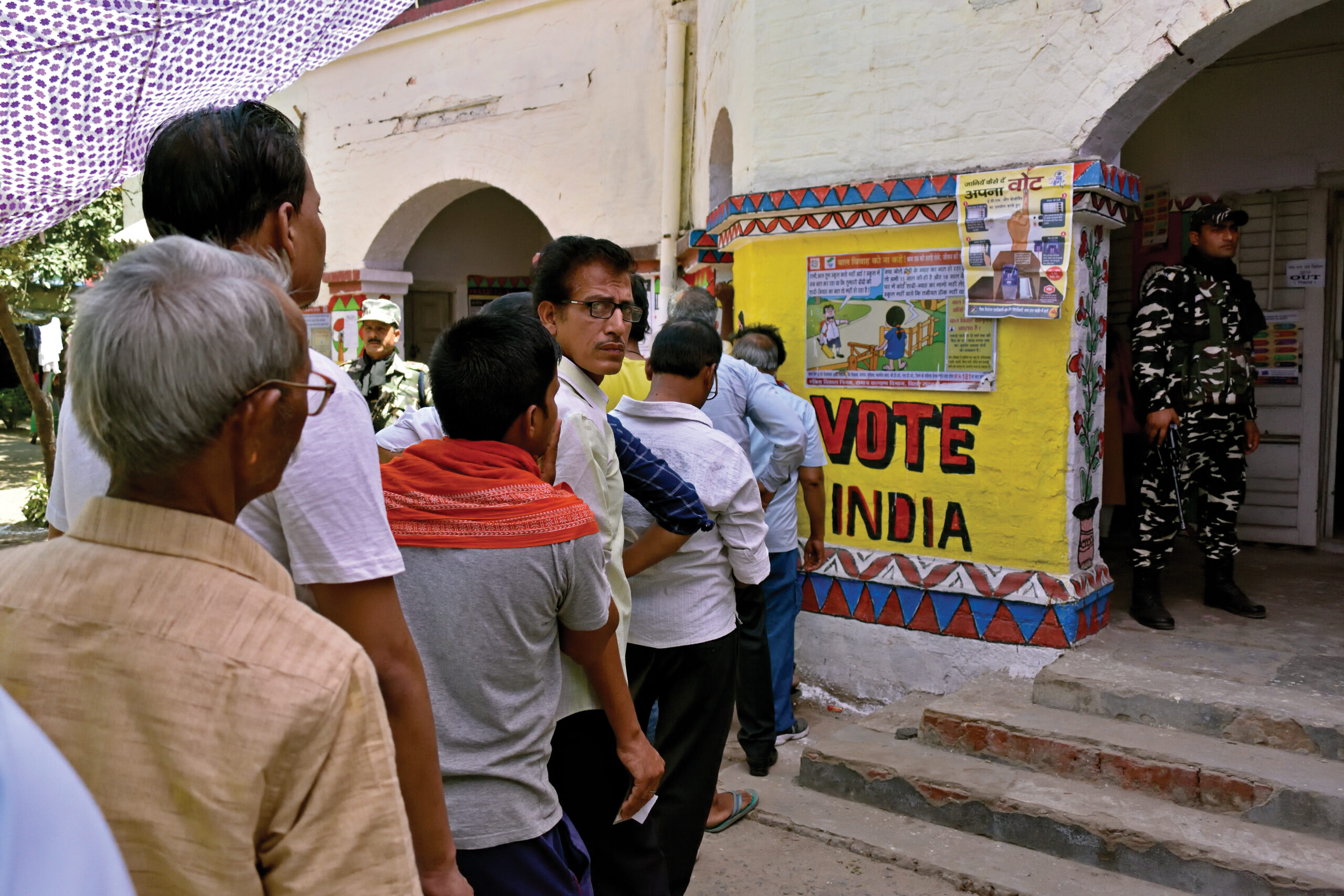
Prime Minister Narendra Modi is probably extremely optimistic about sweeping the Bihar assembly polls. He is banking upon Nitish Kumar’s political credentials in Bihar. Nitish Kumar heads Janata Dal (United) and is at present Chief Minister for the 9th term. He is an ally of Bharatiya Janata Party (BJP)-led National Democratic Alliance (NDA) in Bihar as well at the center. In fact, since BJP returned to power in 2024 parliamentary elections without a majority, the party had to fall back on support of his party (JD-U) to head a coalition government. BJP’s dependence on JD-U to win these Bihar polls certainly raises several questions. Clearly, this suggests that BJP is not yet too confident about its own political standing in the state. This isn’t surprising for till date the state has not had any chief minister belonging to BJP. Considering that BJP’s primary political base is from the Hindi belt, in which Bihar also falls, this seems fairly astonishing.
Bihar has a few strong regional strong parties which appear to have restricted BJP’s success in assembly polls on its own strength. But this is just one side of the picture. The key electoral battle being faced by NDA is certainly from its political rivals, which include members of India-bloc of which the main is Bihar-based party -Rashtriya Janata Dal (RJD). However, the image projected of BJP being hopeful of NDA’s victory primarily because of Nitish Kumar raises several questions linked with what is Modi battling against in Bihar. Of these, the most important is that of he and his coalition being over-confident of this expectation. In other words, some importance needs to be given to Nitish Kumar no more enjoying the same political image he did earlier. Besides, reality cannot be denied. So far, Kumar has not headed the state government primarily on his own party’s strength. He has headed only coalition governments.
Considering, Modi’s electoral campaign in state elections has largely rested on importance of his own image and the so-called Modi-wave, it appears, these elections are likely to be a strong test of their credibility in Bihar. At least, this generally is the impression created by his mega-campaigns. But if he and his allies are still falling back on Nitish Kumar’s image, it apparently suggests that they do not appear to be too confident about electoral standing of this wave in Bihar.
Undeniably, elementarily speaking, NDA faces key battle from India-bloc. But, as suggested earlier, this is a part of the battle. Prospects of voters favoring latter is likely to be dependent on the degree to which they choose not to give greater importance to promises laid out by Modi and his allies. Given that Nitish has been in power for around a decade, his and his allies’ campaign handing out promises to voters regarding their development, well-being and so-forth is naturally raising question as to why weren’t these fulfilled earlier. This naturally implies that Modi and his allies are also battling with the nature of their campaign which may win them the needed electoral support or may not. Their campaign also includes their anti-Pak card accompanied by importance accorded to Operation Sindoor. In addition, their religious-card as well as nature of their caste-politics cannot be missed. Of course, no party can afford to ignore religious and caste-based politicking from its campaign. The key issue at time of election is how well are voters convinced about their gaining by politicians’ usage of such cards. Here, it may be recalled usage of mega-Ayodhya card ahead of 2024 Lok Sabha polls failed to help BJP win 400 seats. Clearly, voters chose not to be moved by it.
Given that Modi is in office as the Prime Minister, one would expect it to be an easy ride for him. But this is not the case. Electoral battle in Bihar may be viewed as a tough fight for Modi from several angles. It is simply not because opposition appears to be giving NDA a stronger fight than before. What cannot be missed is the diminishing importance of Modi-wave and also electoral appeal of Nitish Kumar. Besides, BJP doesn’t appear to have any strong leader in Bihar. It is well known in assembly elections, voters tend to give regional image of leaders campaigning for their respective parties. In this context, BJP’s success in Uttar Pradesh (UP) may also be linked with their key leader in this state – Adityanath Yogi – hailing from here only. Neither of the two BJP national leaders devoting their energy and time to Bihar campaign belong to this state. Both Modi and Amit Shah are Gujaratis.
Undeniably, Modi’s Bihar-campaign is being accorded substantial media coverage. The image projected by media and numerous tools of communication to his Bihar-oriented projects, his rallies in the state and commitment to its development definitely sound great and do give the impression of spelling out great dreams for Bihari voters. However, this is 2025 and not 1990 when people had limited and/or no access to numerous means of communication. Dreams laid out by one set of politicians don’t take long to be shattered by its rivals giving the recipients (voters) the option to take decisions based on their own respective analyses.
Besides, the decision of NDA’s opposition to fight Bihar polls as India-bloc (Mahagathbandhan) also spells a major headache for BJP, JD (U) and their allies. There is no denying that RJD leader Tejashwi Yadav has a strong following in this state. Of course, BJP would love it if this bloc splits and fails to remain united at the time when votes are cast. But this bloc has apparently become much wiser from results of 2024 Lok Sabha polls, where its decision to fight as one bloc prevented BJP from securing majority. Nevertheless, there is no knowing as to whose electoral strategy may appeal to voters at the last minute. What cannot be ignored is that Modi is certainly going overboard to secure victory for NDA in Bihar. This is one field where strategic moves of all politicians, including Modi, are likely to carry little weight against voters’ electoral strategy!