
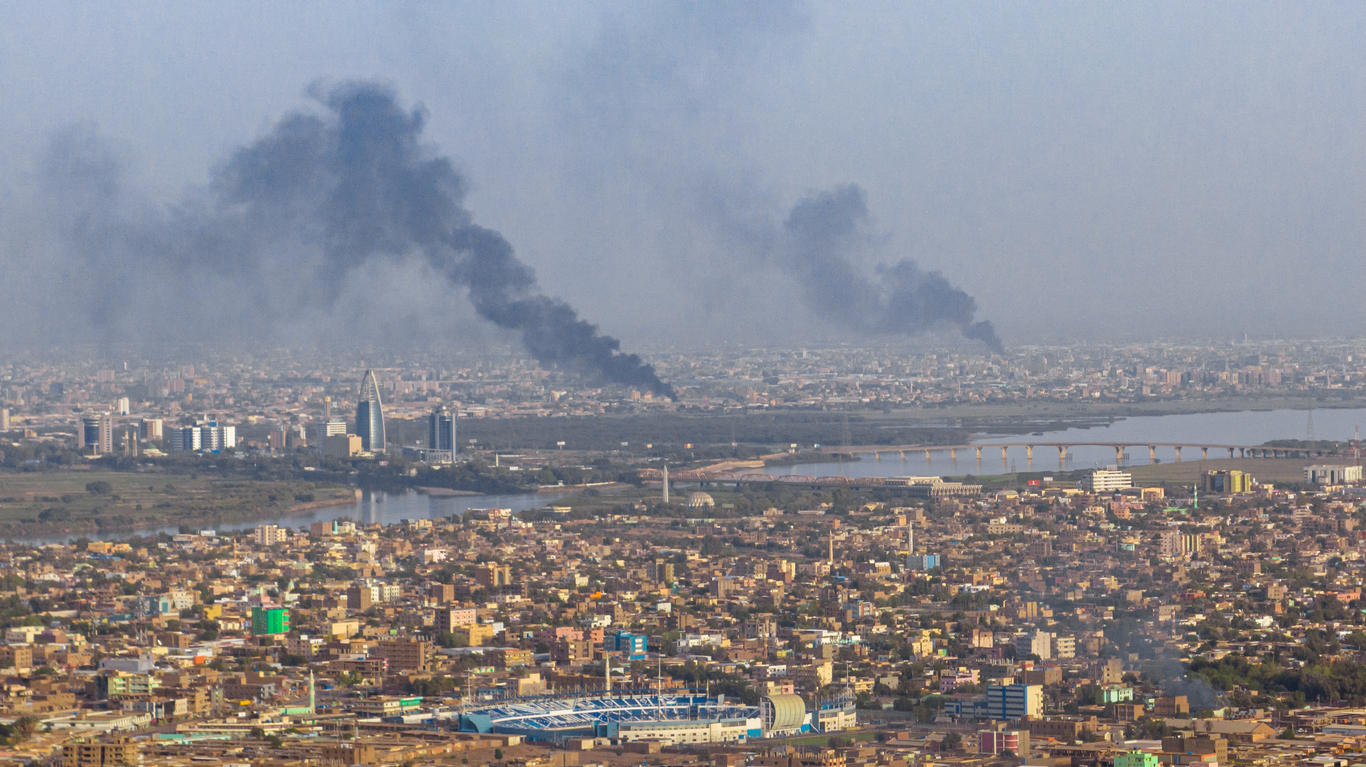
Sudan is facing its gravest humanitarian catastrophe since independence. The civil war between the Sudanese Armed Forces under General Abdel Fattah al-Burhan and the paramilitary Rapid Support Forces led by Mohamed Hamdan Dagalo (Hemedti) has transformed Africa’s third-largest nation into a fractured and failed state. The recent fall of El Fasher, the last SAF stronghold in North Darfur, following an 18-month siege exemplifies the conflict’s brutality and mass killings of innocent civilians even patients in a hospital were not spared. The RSF’s capture of El Fasher city on October 26, 2025, home to over 800,000 civilians, triggered ethnic massacres reminiscent of the 2003 Darfur genocide, with reports indicating at least 1,500 Masalit civilians killed in targeted attacks within the first three days (Human Rights Watch, 2025).
The war’s toll extends beyond direct combat. Conservative UN estimates place deaths at 40,000, though US intelligence assessments suggest over 150,000 fatalities when accounting for famine and disease-related mortality. With more than fourteen million people displaced including 8.8 million internally displaced persons and over 3.5 million refugees, nearly one-third of Sudan’s population has been uprooted (International Organization for Migration, 2025). The Integrated Food Security Phase Classification identifies Sudan as experiencing the world’s largest famine crisis, with 25 million people facing acute hunger (Famine Early Warning Systems Network, 2024).
This conflict represents more than a power struggle between military factions. It reflects the collapse of Sudan’s democratic transition following the 2019 revolution that toppled Omar al-Bashir’s three-decade dictatorship (Suliman, 2023). The war’s persistence owes much to external actors whose strategic and economic interests sustain the belligerents, transforming what began as an internal dispute into a proxy battleground with regional implications.
Genesis of the Conflict
The current war’s roots lie in the dysfunctional power-sharing arrangement following the 2019 revolution. The transitional government, meant to guide Sudan toward democracy, was undermined by the October 2021 military coup executed jointly by Burhan and Hemedti (Abdelaziz, 2023). Their fragile alliance collapsed in April 2023 over disagreements regarding the integration of the RSF into the national army and the timeline for civilian rule restoration.
The RSF, originally formed from the Janjaweed militias responsible for atrocities in Darfur during the 2003-2004 conflict, evolved into a powerful paramilitary force controlling lucrative gold mining operations and maintaining autonomy from regular military command (Lynch & Ateem, 2024). Hemedti’s resistance to full integration under SAF command reflected concerns about losing both political influence and economic assets. Conversely, Burhan’s military establishment viewed the RSF as a parallel power structure threatening the SAF’s institutional supremacy.
Beneath these immediate triggers lie deeper structural issues. Sudan’s economy, impoverished by decades of mismanagement and sanctions, created conditions where control over resources, particularly gold mines and agricultural lands, became central to military financing. Ethnic tensions, particularly in Darfur where the RSF draws heavily from Arab pastoralist communities, have been weaponized to mobilize fighters and justify violence against non-Arab populations including the ethnic groups like Fur, Masalit, and Zaghawa people.
From Pan-Ethnic Revolution to Arab versus Non-Arab Bloodshed
Sudan’s 2019 revolution saw Arab elites from the Nile Valley join forces with non-Arab ethnic groups from marginalized regions like Darfur and the Nuba Mountains to overthrow Omar al-Bashir’s corrupt regime. This unlikely alliance united diverse communities against shared economic exclusion and authoritarian rule. However, that solidarity quickly collapsed into vicious civil war between the Sudanese Armed Forces (SAF) led by riverine Arab officers representing long-standing Arab dominance and the Rapid Support Forces (RSF), a paramilitary group of peripheral Darfuri Arabs, formerly known as Janjaweed militias. Power struggles over state resources revived entrenched Arab-versus-non-Arab divides: SAF leaders dismissed both peripheral Arabs and non-Arabs as illegitimate challengers to their elite status, while non-Arab groups like the Fur, Zaghawa, and Masalit in Darfur blamed both sides for ongoing genocidal campaigns. These tensions fueled RSF-orchestrated ethnic massacres targeting non-Arab villages, reminiscent of the 2003 Darfur genocide such as the October 2025 rampages in El Fasher, involving door-to-door killings, hospital executions, and filmed atrocities as tools of terror, claiming thousands of lives from these communities and prompting the U.S. to officially label RSF actions as genocide. From a Western perspective, this conflict fits a simplistic Arab aggressor versus non-Arab victim framework, stirring echoes of past genocides to drive targeted sanctions against backers like the UAE and calls for humanitarian aid. Yet this reductive view overlooks intra-Arab rivalries, British colonial tactics that deepened tribal rifts through divide-and-rule strategies, and Western-supplied weapons that arm both factions, ultimately treating ethnic complexities as mere pawns in global geopolitics instead of tackling the underlying inequities.
The Proxy Dimension
External involvement has been decisive in prolonging the conflict. The United Arab Emirates is believed to have emerged as the RSF’s primary patron, providing drones, weapons and financial support through complex supply chains involving Chad and the Central African Republic (Amnesty International, 2024). UAE interests in Sudan include access to gold reserves, Red Sea ports, and countering rival influences in the Horn of Africa. Multiple UN reports and investigative journalism have documented that Emirati support has enabled RSF’s military capabilities, including advanced Chinese-made drone warfare that has altered battlefield dynamics.
It is also believed that Egypt supports the SAF through military equipment and training, driven primarily by concerns over Nile water security (Hassan, 2024). With Ethiopia’s Grand Renaissance Dam already affecting downstream flows, Cairo views instability in Sudan as threatening Egyptian water interests and seeks to maintain influence over any Sudanese government. Egyptian support for Burhan also stems from opposition to any potential Muslim Brotherhood revival in Sudan.
Russia’s Wagner Group, recently rebranded as Africa Corps, maintains a presence focused on mining concessions (Ramani, 2023). Russian arms supplies to the SAF continue a relationship dating to Soviet-era military cooperation. Eritrea provides training facilities for SAF forces, while other actors including Qatar and various Gulf states maintain varying levels of engagement.
This external interference has created parallel economies sustaining the war. Gold smuggling routes from Darfur through Chad generate millions for the RSF, while SAF controls Port Sudan and eastern agricultural regions. Neither side faces resource constraints severe enough to force genuine negotiation, as external patrons ensure continued military capability.
Humanitarian Catastrophe and Overlooked Dimensions
The humanitarian crisis encompasses multiple dimensions. Direct conflict mortality, estimated at 61,000 deaths in Khartoum State alone between April 2023 and June 2024, represents only part of the toll (Dahab et al., 2024). Famine induced by deliberate siege tactics, particularly in Darfur and Gezira State, accounts for significantly higher mortality. Research from the London School of Hygiene and Tropical Medicine suggests that death estimates incorporating indirect mortality could exceed 150,000. Cholera and other diseases spread through displacement camps where over eleven million internally displaced persons live in dire conditions. Sudan’s Ministry of Health reported over 60,000 cholera cases and more than 1,600 deaths between August 2024 and May 2025 (International Rescue Committee, 2025).
Gender-based violence has become systematic, with rape employed as a weapon of war and territorial control (UN Office of the High Commissioner for Human Rights, 2025). Women-led resistance committees in Khartoum and other urban centers continue organizing mutual aid and advocacy despite immense risks, yet remain excluded from formal peace processes. Women’s testimony regarding atrocities and their perspectives on transitional justice is systematically sidelined in international mediations dominated by male military and political figures.
Environmental degradation compounds the crisis. Climate change-driven desertification intensifies competition between pastoralist and farming communities in Kordofan and elsewhere, providing recruitment opportunities for armed factions. The Nile’s siltation from Ethiopian dam construction affects Sudanese irrigation capacity, yet war prevents cooperative water management. Reconstruction efforts must integrate climate adaptation, including community-managed water infrastructure and sustainable agriculture support.
Migration flows create regional reverberations requiring coordinated responses. Sudanese refugees in Egypt (1.5 million), Chad (773,662), and South Sudan (349,935) face xenophobia and economic marginalization (UNHCR, 2025). South Sudan, itself recovering from civil war, hosts reciprocal displacement from Sudan. These transnational population movements demand regional frameworks beyond bilateral arrangements.
Trump’s Selective Peacemaking: Uncomfortable Questions on Sudan’s Catastrophic Crisis
The Trump administration’s silence on Sudan’s war is striking. In its first 10 months, it issued no public statements or social media posts about a conflict that has killed over 150,000 people, displaced 14 million, and left millions on the brink of famine. This inaction clashes with boasts of Nobel Peace Prize pursuits. The U.S. slashed USAID funding for Sudan by 83–90% in FY2025, closing 80% of emergency feeding programs amid acute food insecurity for 12 million and declared famines in several areas. No sanctions targeted the United Arab Emirates, even as UN reports detailed its drones and munitions aiding the Rapid Support Forces’ El Fasher offensive and mass atrocities. Bipartisan congressional pleas went ignored, including those from Senators Jim Risch and Chris Van Hollen urging action on Darfur’s war crimes and crimes against humanity. The administration overlooked Sudan’s community-led Emergency Response Rooms, hailed for saving millions and now leading 2025 Nobel contenders. After UN famine alerts for North Darfur in August 2025, it halted all contributions to the $4.2 billion Sudan Humanitarian Response Plan, now funded below 30%. Over 2.5 million Sudanese refugees in Chad received no resettlement or parole options, while the U.S. poured more than $200 billion into Ukraine’s security and economy since 2022. It neither backed nor co-sponsored UN resolutions against arms flows to the Sudanese Armed Forces and RSF, despite Russian and Emirati embargo breaches. Claims of ending the war with one call to RSF leader Hemedti remain untested, as no mediation efforts ensued. This disengagement from the world’s largest displacement crisis and West Darfur’s genocide undermines any global peace leadership ambitions.
Toward a Sustainable Peace Framework
Achieving sustainable peace requires addressing both immediate military dynamics and underlying structural issues. First, the international community must impose a comprehensive arms embargo enforced through satellite verification of supply routes, particularly airbridges through Entebbe and Port Sudan. Financial measures should include freezing assets of military leaders and sanctioning entities involved in gold smuggling networks. Without cutting external military support, belligerents lack incentive for genuine negotiation.
Second, peace processes must center civilian voices rather than military elites. The Forces of Freedom and Change, women’s resistance committees, professional associations, and Darfuri civil society organizations represent legitimate stakeholders whose exclusion from previous negotiations contributed to their failure. A Sudanese National Conference convened under African Union auspices should draft constitutional arrangements guaranteeing federalism, resource revenue sharing, and mechanisms for RSF dissolution and SAF reform under civilian oversight.
Third, humanitarian access must precede political settlements rather than being conditioned on them. Deploying a robust African Union peacekeeping force of at least 15,000 personnel with authority to protect civilians and ensure aid delivery is essential. Such forces require clear mandates, adequate resources, and international political backing.
Fourth, addressing root causes demands integrating climate adaptation, economic reconstruction, and transitional justice. Federal arrangements providing regional autonomy, particularly for Darfur, with guaranteed revenue shares from natural resources can address grievances fueling conflict. Investment in sustainable agriculture and renewable energy infrastructure, rather than solely security sector support, creates economic alternatives to predatory war economies.
What should be the Immediate Priorities?
The international community must prioritize three immediate actions. First, enforce a comprehensive arms embargo with teeth—this requires UN Security Council resolution invoking Chapter VII powers, with satellite monitoring of air and land supply routes through Chad, Libya, and the Central African Republic. The UAE, as the primary RSF patron, must face tangible consequences including sanctions on key officials and restriction of financial transactions through Dubai’s gold markets (Amnesty International, 2024). Second, establish humanitarian corridors protected by African Union forces, initially targeting the 177,000 civilians still trapped in El Fasher and surrounding camps. The recent precedent of the Adré border crossing opening demonstrates that focused diplomatic pressure can yield results. Third, convene an emergency contact group of African Union, Arab League, IGAD, and key Global South nations (India, Brazil and South Africa) to present a unified mediation framework excluding current belligerent patrons from direct mediation roles.
What should be the Medium-term Framework?
Peace negotiations must fundamentally reorient away from power-sharing between military elites toward civilian-led transitional governance. The Sudanese National Conference model should bring together the Forces of Freedom and Change, women’s resistance committees representing neighborhoods that sustained civil society during the war, professional associations, and representatives from Darfur’s ethnic communities targeted for genocide. This conference should draft a transitional constitutional charter establishing a civilian-led government with strict timelines for elections, guaranteed federal arrangements providing regional autonomy for Darfur with constitutionally protected revenue-sharing from gold and agricultural resources, and comprehensive security sector reform integrating legitimate RSF members into reformed national forces under civilian control while prosecuting those responsible for atrocities.
Parallel to political negotiations, economic reconstruction must begin in liberated areas. This includes restoring agricultural production in Gezira State—Sudan’s breadbasket—through seed distribution and irrigation repair, rehabilitating Port Sudan’s operations to restore international trade, and establishing a Sudan Reconstruction Fund managed jointly by the African Development Bank and local Sudanese civil society organizations to ensure transparency and prevent elite capture.
What should be the Long-term Foundations of Peace Building?
Sustainable peace requires addressing the structural drivers that made this war possible. Transitional justice mechanisms must balance accountability with reconciliation—establishing hybrid courts combining Sudanese and international judges to prosecute genocide and crimes against humanity while creating truth and reconciliation commissions focused on community healing. Climate adaptation must become central to reconstruction, with investments in drought-resistant agriculture, community-managed water resources, and cross-border pastoral migration agreements to reduce resource competition. Economic diversification away from gold extraction toward sustainable agriculture, renewable energy, and light manufacturing can reduce incentive structures for armed control of resources.
Regional integration offers pathways beyond fragmentation. Rather than accepting Sudan’s de facto partition, IGAD should facilitate economic interdependence through the East African Power Pool connecting Sudanese hydropower potential with regional grids, joint Nile Basin water management treaties balancing Ethiopian, Egyptian, and Sudanese interests, and freedom of movement agreements enabling Sudanese refugees to work legally in host countries while maintaining return options.
The Cost of Inaction:
The alternative to decisive engagement is clear: Sudan’s complete disintegration creating a Somalia-scale failed state in the Horn of Africa’s strategic heart. This would generate millions more refugees destabilizing already fragile neighbors, create ungoverned spaces for extremist groups including Al-Shabaab and Islamic State affiliates to establish bases, and permanently close the Red Sea’s western corridor to stable maritime trade. The famine projections suggest that without immediate intervention, Sudan could experience mortality surpassing the 1983-1985 Ethiopian famine potentially 500,000 additional deaths by mid-2026.
India’s Strategic Role
India possesses unique capabilities as a potential mediator. As a leading Global South voice without colonial legacies in Africa, India maintains credibility that Western actors lack. India’s federal governance experience, managing ethnic and religious diversity through constitutional arrangements, offers relevant templates for Sudanese federalism. Indian Technical and Economic Cooperation programs can train Sudanese civil administrators and federal police forces.
India’s strategic interests in Sudan and the broader Red Sea region are substantial. Indian Ocean trade routes pass through the Red Sea, making regional stability economically significant. India’s diaspora in Sudan, though evacuated during Operation Kaveri in 2023, maintains economic ties, while Indian wheat shipments have provided humanitarian assistance.
Through its UN Security Council presence and BRICS membership, India can mobilize international support for ceasefire monitoring and arms embargoes. Convening a BRICS-Africa Contact Group could encourage Russian and Emirati restraint. The International Solar Alliance, led by India, can fund off-grid power infrastructure for displaced populations and health facilities.
India must navigate its own economic interests responsibly. ONGC Videsh’s holdings in Sudanese oil blocks require transparent management to avoid complicity in resource conflicts. By hosting dialogues between Sudanese civilian groups and regional mediators, India can demonstrate the impartiality essential for effective mediation.
Last Word: A Comprehensive Roadmap for Peace
Sudan’s tragedy illustrates how internal power struggles, when amplified by external interference, produce catastrophic humanitarian consequences. The conflict’s continuation serves narrow military and foreign patron interests while destroying Sudan’s social fabric and economic potential. As the international community confronts this crisis at the end of 2025, urgent action on multiple fronts becomes imperative.
Sudan’s crisis demands international action matching the scale of catastrophe. Every day of delay means more civilians killed in ethnic massacres, more children dying of starvation, more women subjected to systematic sexual violence. The international community’s response to date underfunded humanitarian appeals, performative peace talks excluding civilian voices, and tolerance of external patrons fueling genocide represents a collective moral failure.
India, alongside other Global South nations unburdened by colonial histories or current resource extraction schemes, can catalyze a different approach. By centering Sudanese civilian agency, enforcing arms embargoes against all external patrons including uncomfortable allies, and committing to long-term accompaniment rather than opportunistic intervention, a coalition of conscience can offer Sudan what it needs most: the space for Sudanese people themselves to rebuild their nation.
The time for decisive engagement is now, before further disintegration renders reconstruction impossible. Sudan’s people have demonstrated extraordinary resilience from the 2019 revolution toppling a dictator to the resistance committees sustaining communities through war. They deserve international partnership matching their courage. The question is whether the world will answer their call before it is too late.