
 ABOUT 15 YEARS AGO, three Southasian nations underwent political transitions. In 2008, Nepal became a federal republic, ending 250 years of monarchy. Bangladesh resumed its status as a multi-party democracy after a two-year interregnum. In 2009, Sri Lanka saw the end of a 26-year-long civil war. But the optimism that came with these developments did not last, and the politics of all three countries came to be marked by corruption, nepotism and impunity in different forms, resulting in civilian disaffection, unrest and ultimately, between 2022 and now, the unseating of governments in power.
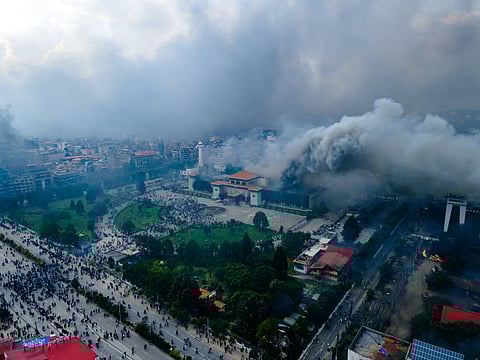
After Gen Z-led protests in Nepal in early September 2025, with heavy-handed measures by security forces leading to the deaths of 19 Nepali youth and a mass uprising that saw the burning of Nepal’s parliament. The country’s prime minister, K P Sharma Oli, was also forced to resign. Last year, Sheikh Hasina faced a similar fate as Bangladesh’s prime minister after nationwide protests against the authoritarianism of her Awami League government, and she fled to India in August 2024. At least 1400 people had been killed in the previous weeks as security forces clashed with protesters across the country. In 2022, Sri Lanka’s president, Gotabaya Rajapaksa, fled the country after a massive, months-long protest movement against corruption and economic mismanagement, at the end of which crowds overran the presidential palace.
In all three countries, the protests were led by young people, especially students. In all three cases, the protests began peacefully and were issue-based, but escalated after government heavy-handedness, resulting in the unanticipated toppling of the ruling regime. And all three movements are united not only by their negation of the established political status quo, but also by the absence of a clear blueprint for the future.
WHY ARE SOUTHASIAN YOUTH taking to the streets against their governments? The simplest answer would be the lack of economic opportunity. According to the World Bank, high fertility rates in Southasia in the past – even as these have declined more recently – have created a “youth bulge” – the largest in the region’s history. Analysts have been unsure whether to see this as an opportunity, with a “demographic dividend” to leverage for economic growth, or a demographic “time bomb” threatening explosions of discontent.
Bangladesh has a median age of 25.7 years. The lived reality of a large number of the young people who powered last year’s revolution was far removed from the past that Hasina relied on for political legitimacy – especially Bangladesh’s Liberation War in 1971, and the Awami League’s part in the country’s independence. Hasina’s knee-jerk reaction in calling student protesters razakars – a derogatory term for collaborators of war criminals – was part of a hackneyed political discourse that had become second nature for the Awami League government. Needless to say, it did not go down well among young protesters, whose movement against what they saw as unfair reservation of seats in government jobs and public education – called the quota reform movement – was a manifestation of the youth’s frustration with entrenched corruption, nepotism and impunity. The movement also delegitimised the Awami League’s weaponisation of Liberation War rhetoric for political benefit. One of the major points of contention for the movement was the 30-percent quota of seats for descendants of freedom fighters, including their grandchildren.
The kind of high-handedness that Hasina showed against the movement in Bangladesh was also visible in Nepal when Oli’s government met protesting youth with disproportionate force rather than trying to understand their grievances. The derisive tone of both political leaders towards the protesters reflected a huge gulf between the masses and their representatives.
In Bangladesh, youth disenchantment with electoral politics was reflected in low voter turnout during elections, which were considered to be largely farcical after 2008, when Hasina returned for a second stint in power. Under the Awami League, elections were reduced to a cosmetic ritual, meant to re-coronate Hasina at regular intervals. The 2024 election registered only a 41.8-percent turnout – and even this figure was decried by critics as highly inflated. Hasina’s 15-year-long misrule witnessed multiple movements of dissent and discontent: the Shahbagh movement in 2013, seeking justice for war crimes committed by members of the Jaamat-e-Islami during the 1971 war; a movement that opposed Value Added Tax (VAT) on education in 2015; a road safety movement in 2018; and a quota reform movement in 2018 that preceded the one in 2024. Hasina dealt with these movements with repression and manipulation, but the movements were not futile. The 2015 movement, for instance, resulted in the government revoking the VAT on education. The 2018 road safety and quota reform movements spread political awareness among the youth. Commentators even called the road safety movement a “baptism for future political activists”. So while the youth were increasingly becoming sceptical of the polling booths, their trust in street protests was still alive. Each movement might even have learnt from its predecessors, and successive iterations of popular mobilisation arguably became stronger.
Nepal, too, registered low voter turnout, at 61 percent, in its last general election, in 2022. Meanwhile, the country remained in a state of both political stasis and political instability: three established parties continued to strike deals to share power, but no government completed a full term in office since Nepal’s return to democracy in 2008. The median age of Nepal’s population stands at 25.3 years, even lower than that in Bangladesh. With a lack of economic opportunities within the country, most young people opt to go – or are being compelled to go – abroad for work. Some young Nepalis have even signed up as mercenaries in Russia’s war against Ukraine.
Sri Lanka, like Bangladesh, was afflicted with dynastic politics, with the Rajapaksa family treating the country as its personal fiefdom. The powerful presidency was held by Mahinda Rajapaksa from 2005 to 2015, then by his brother Gotabaya from 2019 to 2022, with Mahinda as the prime minister. The Rajpaksas operated within an elite political bubble that cut them off from the people. The median age in Sri Lanka is 33.3 years, and the country’s age distribution was reflected in the broader participation from different age groups in the Aragalaya protests that brought the Rajapaksas down. The youth, nonetheless, played a huge role in the protests.
THE FRUSTRATIONS of the youth of Nepal, Bangladesh and Sri Lanka have long-standing causes, including economic struggles but also the economics of “development” itself, with governments focused on big-ticket infrastructure rather than robust mass employment. Since the end of the civil war, Sri Lanka has been heavily reliant on foreign debt. After attaining middle-income status, which disqualified it from much foreign aid, the country relied more on commercial loans, which led to an increased debt-to-GDP ratio. (This peaked at 120.9 percent in June 2022, at the height of the country’s economic crisis.) The government began using foreign exchange reserves to repay debt, including interest, and the depleted reserves received a further jolt from the decline of tourism owing to the 2019 Easter Sunday bombings and the Covid-19 pandemic. The lack of foreign reserves translated to a collapse of vital imports such as food and fuel. These dynamics were aggravated by a series of myopic decisions – such as mindless printing of currency, tax cuts and a ban on chemical fertilisers – that further fuelled inflation and shortages. In April 2022, Sri Lanka became the first country in the Asia-Pacific region to default on its sovereign debt in the 21st century.
Bangladesh, once dismissed by the former United States Secretary of State Henry Kissinger as a “basket case”, confounded its detractors by achieving the lower middle-income status in 2015. It is on track to exit the United Nations’ Least Developed Countries list in the near future. The country has also supplemented its economic growth with substantial social development, achieving remarkably decreased infant mortality and child malnutrition, as well as improved reproductive health, in the 1990s and 2000s. However, Bangladesh’s social progress was tenuous. Its economy was sustained by export earnings and remittances from workers abroad, both of which collapsed with the Covid-19 pandemic.
Bangladesh is the world’s second-largest exporter of fast fashion after China. The ready-made garment (RMG) sector accounted for 85 percent of the country’s USD 55 billion in export earnings in 2022. However, RMG workers toil in often dire conditions – as the world was reminded when the Rana Plaza factory outside Dhaka collapsed in 2013 – and for paltry pay. In 2023, the country faced huge labour unrest as workers fought for higher wages, in part to account for inflation in the post-pandemic economy. While these protests were met with massive repression, they highlighted the flaws in the Hasina government’s economic model. Rising inflation and unequal growth took a toll on the country’s economy.
The export sector remained concentrated on low-skill work, and there were no jobs for the rising numbers of educated youth. In 2023, 19 percent of Bangladeshis between the ages of 15 and 29 were classified as being not in employment, education or training, and more than 8 million young people were out of work. To make things worse, the government raised electricity and gas prices three times within a year. Meanwhile, cases of corruption and nepotism were increasingly being brought to light. The anti-government protests that finally spilled into the streets in July 2024, which focussed via quota reform on the country’s crisis of employment and opportunity, were in some ways inevitable.

Like Bangladesh, Nepal has also impressed observers on certain measures. World Bank data shows that the country succeeded in reducing poverty from 55 percent in 1995 to just 0.4 percent in 2023 (with the poverty line at a minimum daily requirement of USD 2.15 per day). But Nepal’s economy has relied heavily on labour out-migration, with remittances accounting for 30 percent of its GDP. Nepal’s economic gains have not translated into quality jobs within the country. During the 2022–2023 fiscal year, close to 750,000 Nepalis went abroad for work – a massive number in a country of roughly 30 million people. The World Bank reports that a “staggering” 82 percent of Nepal’s workforce is employed in the informal economy. So here, too, a crisis was brewing long before the September 2025 protests struck.
The three cases highlight the loss of faith in the prevailing economic model in every country, each in various ways fitting into the neoliberal consensus that has structured the present global economy.
UNLIKE THE “grey rhino” economic events in Nepal, Bangladesh and Sri Lanka – visible from afar, but ignored until calamity arrived – each country had its own distinct, unpredictable “Black Swan” political event that precipitated a crisis. Even so, the three shared some broad political similarities that contributed to mass upheaval.
All three countries are categorised as “partly free” by Freedom House in its assessment of global democratic freedom. Bangladesh and Nepal were categorised as “hybrid regimes” and Sri Lanka as a “flawed democracy” by the Economist Intelligence Unit’s Democracy Index 2024. A common theme across the three was dissatisfaction with representative democracy and electoral politics. After 2008, Bangladesh descended gradually into authoritarianism, with each election plunging the country deeper into a political morass. With an extremely compromised vote used to bolster the illusion of Hasina’s popularity and mandate, she herself became lost in the phantasmagoria that she had built around herself, which increasingly isolated her from the masses.
In Nepal, elections did not offer meaningful choices, with three major parties – the Nepali Congress, the Maoists, and the Communist Party of Nepal (Unified Marxist–Leninist) – dominating government between them ever since the country transitioned back to democracy after its civil war. This meant ad nauseum circulation of an old political elite and discredited political leaders, with no meaningful political or economic agenda offered to transform the country. Nepali politics was also extremely unstable, with no government completing its full term amid endless powersharing deals and backstabbings. The lack of political stability only further encouraged short-term thinking among politicians, with a focus on extraction and accumulation of wealth while in power rather than long-term programmes of uplift and progress.
In Sri Lanka, the dynastic dominance of the Rajapaksas, who mounted a comeback in 2019 after a narrow popular defeat in 2015 that saw many count them out, became a lightning rod. Their closeness to much of the rest of the political establishment also eroded the public’s sense of meaningful electoral choice. The failure of even the Yahapalana government elected in 2015 to displace the Rajapaksas only added to mass disenchantment with the country’s established leaders and parties.
The political scientists Nic Cheeseman and Brian Klaas argue that the greatest paradox of our time is that “there are more elections than ever before, and yet the world is becoming less democratic” – a theory borne out in Southasia, and especially in Bangladesh and Sri Lanka. (Nepal, since the end of its monarchy, has been spared the mad excesses of authoritarianism witnessed in Bangladesh under Hasina and in Sri Lanka under the Rajapaksas, but its rulers have hardly been exemplary democrats either.) While the uprisings since 2022 have offered course corrections, it is not clear if, in the long term, they will result in a deepening of democracy. The pattern globally and in Southasia – see, for example, Narendra Modi’s rise in India – is that new authoritarians are embracing multiparty elections. Rather than having fair elections that can check their power, they hold manipulated elections that embolden them by providing international legitimacy and so clearing the path for foreign aid and trade. This is leading in many cases to a dangerous divorce between elections and democracy, leading many – including in Southasia – to question the usefulness of the vote.
There are also political dynamics at play outside of electoral structures and systems. The opening up of Nepal and Bangladesh’s economies some four decades ago also opened the way to the growth of their NGO sectors. The delivery of foreign aid relied more often on NGOs than governments. Both countries have large numbers of NGOs, and their development sectors are a major source of employment. David Lewis, a specialist in global politics and international relations, argues that in Bangladesh, NGOs such as BRAC, Grameen and Proshika have become so big and complex that they functioned as components of a “parallel state”. This has had the effect of creating a “franchise state” – a state without citizens, where the NGOs replace the government in service delivery and sever the accountability mechanism between the state and the citizen. The ousted government seemed to replace public consultation with consultation with “stakeholders”, where that term came to mean the NGO ecosystem.
Nepal’s bloated NGO sector – in many cases controlled by the same sociopolitical establishment that ruled the country – carried forward a neoliberal “good governance” agenda, as argued by the journalist and long-time Nepal observer Thomas Bell. Here, the NGO agenda has had the inadvertent effect of turning civil society apolitical and neutral, where it should be acting as a check on the government. A large number of NGOs in Sri Lanka, too, focus on “service delivery” and “good governance”, with similar consequences.
While it is generally true that NGOs have faced increasing official scrutiny across Southasia in recent times, with their funds and operations coming under greater surveillance as ruling governments fear they might act as organs of dissent, it is also true that the NGOisation of civil society has indirectly helped governments in blunting social movements seeking reform. The Bangladeshi political scientist Rounaq Jahan has made the case that leaders in Southasian countries tend to dichotomise values and goals, where citizens are expected to falsely choose between democracy and political participation on the one hand and economic development and national integration on the other. In Nepal, Bangladesh and Sri Lanka, people sacrificed democracy and political participation for a long time in the hope of economic betterment. However, when political elites in three countries have failed to keep the economic end of this bargain, they have found themselves increasingly exposed to their populations’ ire. The loss of avenues to register dissent, within civil society as well as electoral spaces – the result of NGOisation, political repression and a region-wise crisis of credible media – ultimately pushed the masses to the streets.
THE PROTESTS in Sri Lanka, Bangladesh and Nepal remind us that disillusioned youth can transform frustration into collective power capable of sweeping away even the most entrenched regimes. This should serve as a warning for other governments in the region – although clearly Hasina’s regime in Bangladesh failed to learnt from the events in Sri Lanka, and Nepal’s government failed to heed the lessons of Sri Lanka and Bangladesh.
The lesson for authoritarian rulers and ineffectual regimes across the region is clear: repression may delay pushback by citizens, but it cannot forever prevent it. Each crackdown and every act of dismissal or violence against young voices risks triggering a revolution. In Sri Lanka, the Aragalaya paved the way for the 2024 elections that brought to power Anura Kumara Dissanayake and the National People’s Power (NPP) coalition – until then fringe players in the country’s politics – with a sweeping two-thirds parliamentary majority. AKD, as he is known, has pushed through moves like abolishing perks for former presidents, and his government has arrested the former president Ranil Wickremesinghe on corruption charges. In Bangladesh, the Muhammad Yunus-led interim government backed by the student protesters who led the July Revolution has launched commissions to reform elections, the judiciary and public service, and is holding a new election in early 2026. And in Nepal, the Gen Z movement that forced Oli’s resignation and the dissolution of the old parliament has been instrumental in the appointment of the former chief justice Sushila Karki as interim prime minister, with fresh elections currently set for March 2026.
But there are still significant dangers of old patterns reemerging. In Sri Lanka, the Dissanayake government’s investigations into corruption have so far bypassed the NPP’s own members as well as the Rajapaksas. It has also failed on other promises, including one to repeal repressive anti-terror laws. In Nepal, the jury is out on what kind of government and politics the next election will bring. With a lack of consensus already clear on the political front, there does not seem much impetus for a radical economic agenda.

In Bangladesh, the Bangladesh Nationalist Party (BNP), which was significantly weakened by political persecution during Hasina’s rule, is once again the frontrunner for the next election – but the BNP is beset by allegations of extortion and misconduct and has been reluctant to support any radical political reform. Many people still remember the party’s last tenure, between 2001 and 2006 tenure, when Bangladesh repeatedly topped the charts as the most corrupt country in the world. Bangladesh is also seeing a resurgence of Islamist parties espousing political and social conservatism. The Islamist Chhatra Shibir, the student wing of the Bangladesh Jamaat-e-Islami, has won a large number of seats in recent union elections at Dhaka University and Jahangirnagar University, possibly denoting a shift towards political Islam among the youth. Many commentators note that the Jamaat-e-Islami, a party that opposed the liberation of Bangladesh from Pakistan in 1971, is enjoying the most support it has ever had in the history of independent Bangladesh. Questions loom over the new student-led National Citizens Party, regarding its inexperience and organisational weakness as well as whether it will ally with the Islamist right.
So far, no one in Sri Lanka, Bangladesh or Nepal has articulated an overarching vision of how to overhaul the old systems and structures. This means Southasia is in wait-and-watch mode to understand whether its three recent uprisings are genuine revolutions or just paroxysms of politically repressed and economically battered societies.
The article appeared in himalmag