
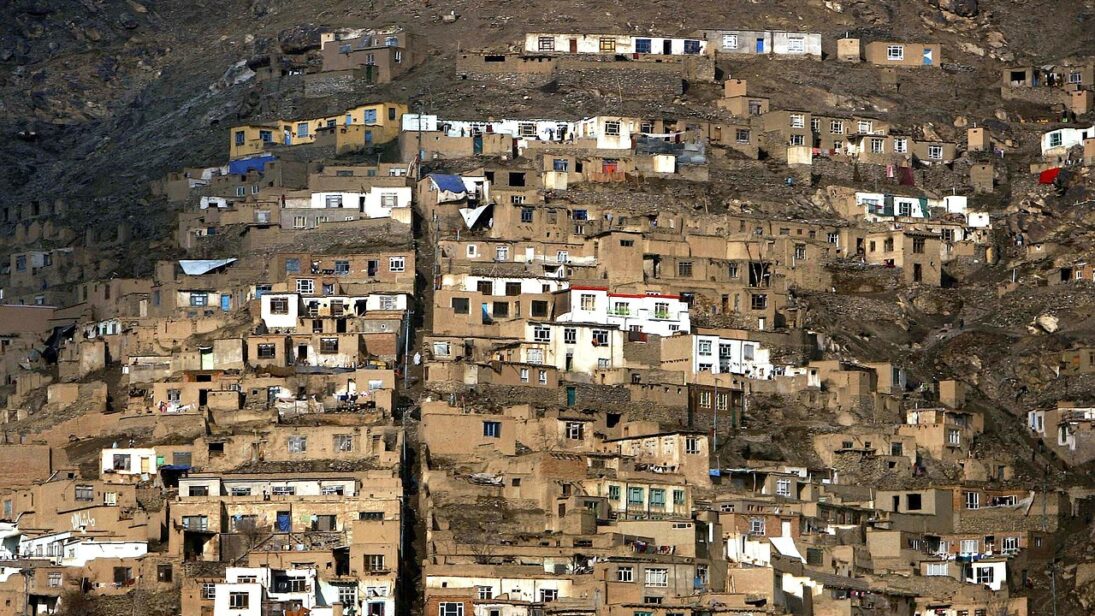
Four years into the second period of rule by the Taliban regime, Afghanistan has plummeted into economic insecurity and a human rights crisis. Following the Taliban takeover in 2021, the regime’s chief spokesperson Zabihullah Mujahid had claimed, “we are going to be working […] in order to revitalize the economy, for our reconstruction, for our prosperity.” The statement represents just one of many unrealized promises made since the Taliban took power, most with the aim of garnering international recognition, or at least reducing international isolation, for the Islamic Emirate of Afghanistan. While the Taliban has made headway on recognition, particularly with Russia’s 2025 formal recognition of the regime and its growing engagement with Central Asia and China, the Taliban has failed to deliver on its commitments to govern effectively on the economy, human rights, and security. Moreover, the regime has not leveraged its deepening international relationships to better the lives of Afghans.
Last week, the international community gathered for the United Nations General Assembly (UNGA) High-level Week, an annual summit that invites heads of state to outline their priorities and debate urgent global issues. At the summit, the Taliban’s Afghanistan was frequently criticized and many stakeholders called for increased humanitarian aid, but states signaled no clear shift in their collective approach to Afghanistan.
Since August 2021, most states have pursued an absolutist strategy of isolating and criticizing the Taliban—under this approach, living conditions for most Afghans have only worsened. To break this cycle, the international community should adopt a more unified, pragmatic approach to Afghanistan, coordinating to extend economic incentives conditioned on substantive reforms by the Taliban.
Economic Woes
After the U.S. invasion of Afghanistan in 2001, Afghanistan’s economy grew through foreign assistance— with 75 percent of state expenditure financed by Western donors— and international trade. After the Taliban took over in August 2021, Afghanistan’s economy faced immediate contractions due to the freezing of billions in foreign banks, a rapid exodus of skilled Afghans, the Taliban’s 2022 opium production ban, and its prohibition on female education and employment. With President Donald Trump’s 2025 suspension of nearly all remaining U.S. aid to Afghanistan and the worldwide deportations of Afghans, these hardships are only expected to continue. Though Afghanistan’s economy saw 2.7 percent GDP growth in 2024, it has only recovered 10 percent of the losses from the post-2021 contraction. A World Bank report argues that even this modest growth is uncertain to continue and has done little to address deep-rooted economic issues.
“Though Afghanistan’s economy saw 2.7 percent GDP growth in 2024, it has only recovered 10 percent of the losses from the post-2021 contraction.”
Since 2021, the Taliban has largely pinned their hopes for economic improvement on international investments into the country, which could stimulate growth and provide employment to Afghans. To be sure, the regime has successfully attracted limited investments from overseas, particularly from China in the mining sector. However, thus far, such projects have either been insufficient in providing a significant boost to the Afghan economy or not yet been implemented.
From the Taliban’s perspective, recent developments could inspire confidence that Afghanistan’s economic fortune is on the rise. Russia’s formal recognition serves as an opening for greater economic ties, including with Moscow’s regional partners in Central Asia. Moreover, the Pakistan-Afghanistan-China trilateral has generated new prospects for investment, such as Chinese plans to extend the China-Pakistan Economic Corridor (CPEC) into Afghanistan. If the trilateral can execute this vision, Chinese political and financial backing could usher in more robust economic connectivity between Afghanistan and Pakistan with improved infrastructure, access to new markets, and stronger regional trade flows.
At the same time, these initiatives warrant skepticism. The perennial issue of security continues to derail the Taliban’s efforts to secure enduring economic investments in Afghanistan from potential partners. Pakistan, in particular, holds deep reservations about the regime’s commitment to stemming cross-border terrorism, a grievance that has not dissipated despite superficial alignment through the trilateral. However, even if the Taliban resolved security issues, it would not be sufficient to attract meaningful investment.
In the absence of meaningful governance reforms, large, long-term investments in Afghanistan will remain difficult to justify. The long delays in or recent cancellations of Chinese projects, such as the Mes Aynak copper mines and the Amu Darya oilfield, show that even willing stakeholders face obstacles of weak institutions and infrastructure. Perhaps most importantly, outside investment can only be so impactful if structural economic issues persist, like banking sector fragility—the World Bank reports that Afghanistan is at risk of entering long-term stagnation, a period marked by both slow economic growth and high unemployment rates.
Human Rights Failures
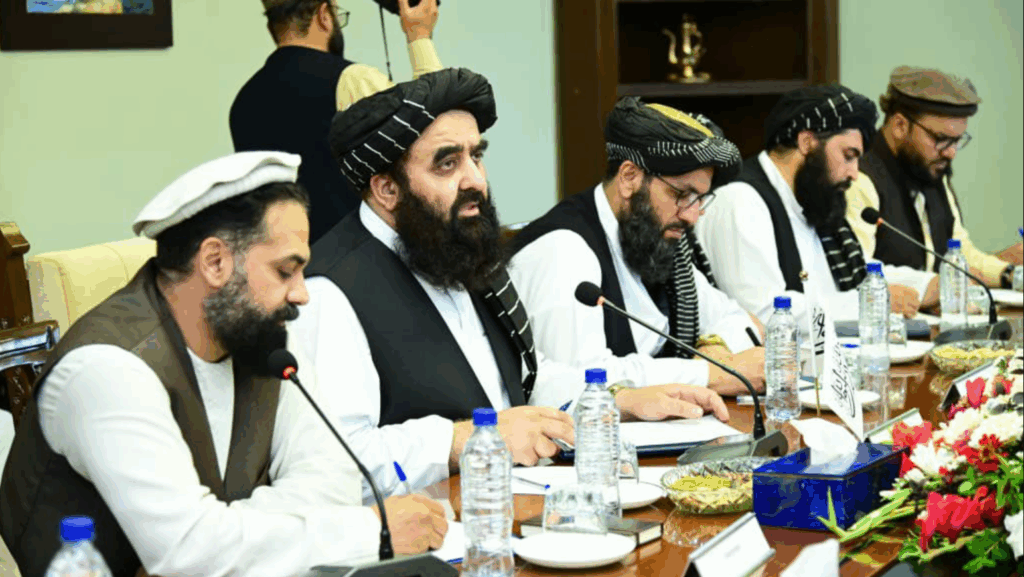
Because many countries condition the resumption of foreign aid and the unfreezing of assets on the Taliban providing equal rights to women, economics and human rights are inextricably linked in the Taliban’s Afghanistan. However, the state of human rights in Afghanistan has only deteriorated, especially for women and girls. 2025 marked the fourth year since the Taliban has banned girls from gaining education beyond grade six, with no indication of a future policy change. In August 2024, the Taliban passed the Law on the Promotion of Virtue and the Prevention of Vice, an all-encompassing legislation codifying Afghan life, including criminalizing women’s voices heard in public. The legislation also imparted a stricter mahram requirement, mandating that women be accompanied by a male relative with whom marriage is religiously prohibited—even when seeking medical care. These provisions are enforced by “vice and virtue authorities” who ensure that such requirements are observed across all provinces, restricting most areas of women’s everyday lives.
In this context, recent years have seen renewed interest in the plight of Afghan women under the Taliban. Various UN agencies have continued to focus international attention on the Taliban’s severe restrictions on women and even moved to recognize gender apartheid as a crime against humanity. Additionally, the International Criminal Court has issued arrest warrants for senior Taliban officials due to gender persecution. The Taliban has been entirely unresponsive to this chorus of international scrutiny: the group responded by banning the UN special rapporteur on human rights in Afghanistan from entering the country, and largely portray the UN as spewing propaganda.
Russia and China— two countries with more substantial political and economic relationships with the regime— have both called for more inclusive governance, but the Taliban has thus far shown little willingness to pursue reforms, refusing to engage even in dialogue. However, both states did not condition engagement on reform, likely dismissed as rhetorical signaling rather than substantive demands. In addition, the regime continues to receive humanitarian aid for state-run programs, but aid diversion has become a significant challenge— resources are frequently utilized for other purposes, including to fund institutions that exclude women. In sum, the Taliban has done little to leverage existing relationships and aid to better the lives of Afghan women and girls.
Conditional Engagement: A Path Forward?
Concerned observers have to seriously reckon with the fact that four years of the international community’s punitive, isolating approach has made little headway. Instead, the Taliban has found partners willing to offer some degree of legitimacy and economic engagement with minimal demands on governance reforms. Partners like Russia and China care deeply about transnational threats emanating from Afghanistan, but they have not meaningfully pushed the Taliban on domestic issues like inclusive governance. For international stakeholders who are invested in the social and humanitarian future of Afghanistan, the economic imperatives facing the country mean that the opportunity still exists for pragmatic engagement with the Taliban regime conditioned on social, security, and political reforms.
“Concerned observers have to seriously reckon with the fact that four years of the international community’s punitive, isolating approach has made little headway.”
Rather than wholesale recognition, focused economic engagements hold promise. While recognition could prove unpopular with domestic polities, economic initiatives would provide concrete benefits both to the regime and potential partners. For instance, cooperation on a critical minerals project might prove attractive to the Taliban and international stakeholders. Anxieties about critical minerals have animated many foreign policy moves early in the second Trump administration, including deals with Pakistan, and the chance to displace Chinese dominance in the Afghan minerals sector might appear worthwhile to policymakers.
Importantly, however, concerned stakeholders like the United States should act together, adopting a unified front that draws on collective leverage to produce a greater incentive for reform in Afghanistan. These actors could include countries with significant overseas assistance portfolios, such as the Northern European nations and Japan, and countries scrambling to solve critical resource scarcities, like India. Furthermore, given the political baggage associated with the UN for the Taliban regime, this coalition would likely be more successful if it remained ad hoc and flexible.
Undoubtedly, the main risk to such an approach is the possibility that the initiative does not lead to meaningful reforms, leaving the grave challenges in Afghanistan unaddressed even as the regime reaps the symbolic and material benefits of greater international engagement. To mitigate the chances of this outcome, the international community should prioritize clarity of conditions (the extension of basic rights to women and other important benchmarks) and incentives (the unfreezing of assets or the restoration of aid flows) at the outset and build in verification and oversight mechanisms to any agreement. For example, the U.S. International Development Finance Corporation already employs formal mechanisms to ensure transparency and the appropriate use of funds.
The Taliban regime is unlikely to meet every demand the international community makes, but conditional engagement creates opportunities for the regime to make incremental concessions. Critics who decry engagement as “normalization” should consider the alternative: an Afghanistan with a much smaller chance of escaping the social and economic impoverishment that plagues the country.
The article appeared in southasianvoices