
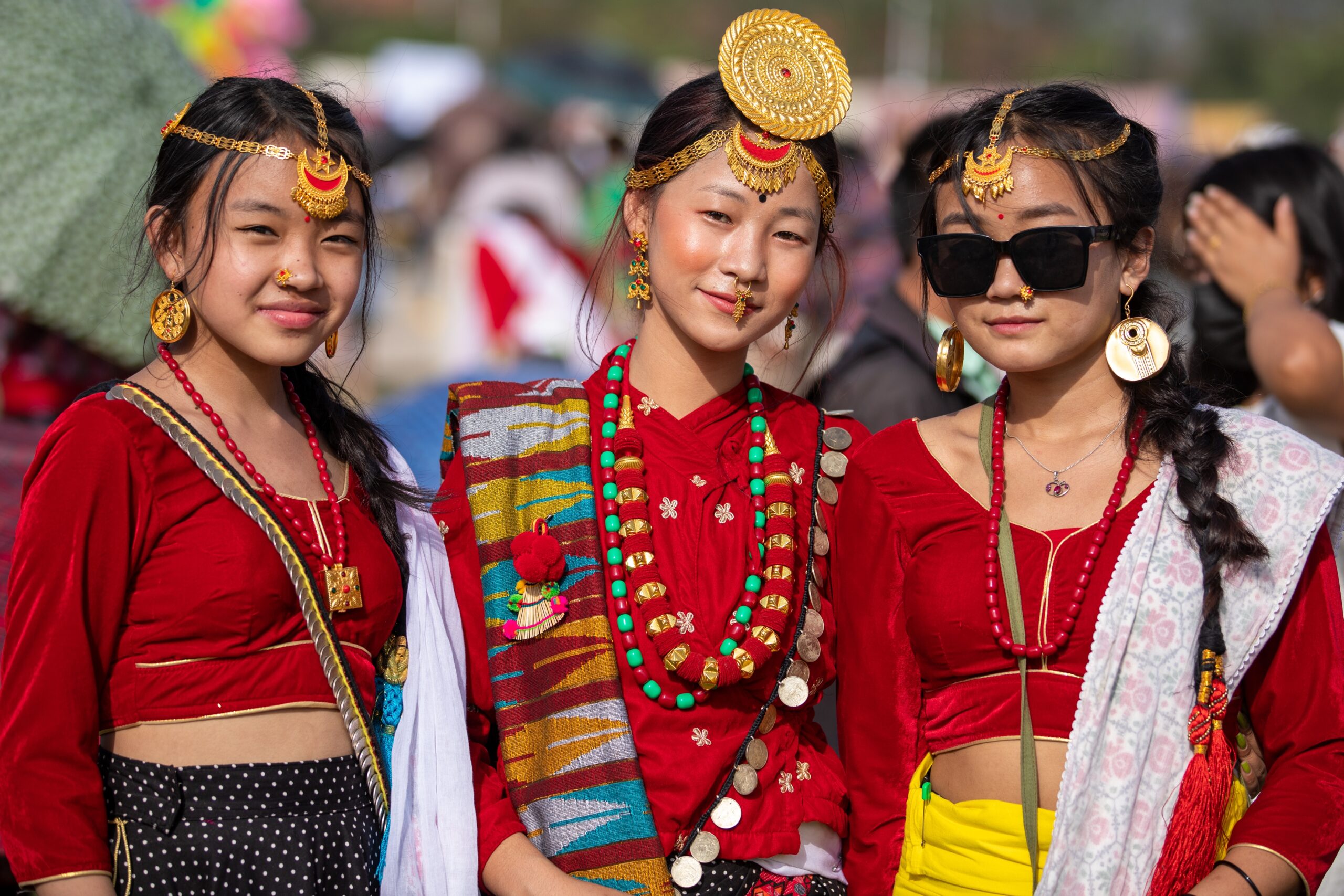
The common refrain that Nepal has somehow leapt “from tribal society to urbanization in Kathmandu” is both misleading and unjust to the country’s history. While the capital city is undergoing an extraordinary transformation, Nepal’s story is far more complex than a simplistic tribal-to-urban narrative suggests. Kathmandu may be the magnet for migration, commerce, and culture, but the deeper reality is that Nepal has always been a multi-ethnic, multi-caste society—one that remains overwhelmingly rural even as it urbanizes at one of the fastest rates in the world.
A Diverse Society, Not a Tribal One
To begin with, Nepal was never a mere patchwork of isolated “tribes.” The country’s social fabric is historically diverse and layered. According to the 2021 census, there are more than 125 recognized ethnic and caste groups across the nation. The indigenous peoples—collectively known as Adivasi/Janajati—are officially recognized, with distinct languages, customs, and histories. Alongside them are high-caste Hindu groups such as the Khas, Madhesi, and the Newars of the Kathmandu Valley, who long dominated state structures.
Some small communities, such as the Raute nomads, still pursue a traditional, forest-based lifestyle, but even they are negotiating survival within a rapidly changing Nepal. Importantly, when King Prithvi Narayan Shah unified Nepal in the 18th century, the Hindu caste hierarchy was forcibly imposed on non-Hindu communities. Yet these groups often resisted full assimilation, maintaining hybrid practices that demonstrate the resilience of Nepal’s cultural mosaic. To call this diverse social system “tribal” is to erase centuries of shared histories, intermarriage, and negotiation between ethnicities and castes.
Rapid but Uneven Urbanization
Urbanization is undeniable, but it is far from uniform. Nepal today is among the fastest-urbanizing countries in the world, yet paradoxically remains one of the least urbanized. In 2023, only about 21.9 percent of Nepalis lived in officially designated urban areas. Rural life remains dominant, sustained by agriculture, remittances, and tightly knit community networks.
Kathmandu Valley stands apart. Its metropolitan area, estimated at 1.67 million in 2025, has grown relentlessly as young men and women migrate in search of education, jobs, and security. Pokhara, the largest mid-sized city, is growing at around 5 percent annually, and the southern Terai plains are dotted with market towns expanding at 5–7 percent per year along highways. These shifts are changing the geography of power: towns once considered rural are urbanizing “under the radar,” without proper planning or governance.
The country’s future will not be determined only in Kathmandu, but also in the secondary cities and emerging border towns that connect Nepal to India and the wider global economy.

Kathmandu: A Capital Under Strain
The pressures of migration are nowhere more visible than in Kathmandu. The valley has always been multi-ethnic, dominated historically by the Newars, whose architecture, rituals, and festivals define its identity. But in recent decades, the city has become a melting pot of cultures, languages, and livelihoods. With this has come a new set of challenges.
Environmental stress: Unplanned construction has eaten away at farmland, forest cover, and open spaces. Air pollution from vehicles and brick kilns is severe, and waste management remains inadequate. Rivers that once nourished the valley are now heavily polluted.
Infrastructure gaps: Chronic shortages of drinking water, electricity blackouts, and inadequate drainage make urban life precarious. Public transport is overcrowded and inefficient.
Social change: The arrival of rural migrants has shifted gender roles, with more women entering the workforce. Ethnic minorities and marginalized castes are asserting their rights through political movements. These dynamics generate both opportunities for inclusion and tensions around resources and identity.
Kathmandu epitomizes both the promise and peril of Nepal’s urban transition: diversity and creativity on one hand, fragility and dysfunction on the other.
The Double Transformation: Rural to Urban, Unitary to Federal
Nepal today is undergoing two transformations at once. First, the spatial shift from a rural to an urbanizing economy. Second, the political restructuring from a unitary monarchy to a federal republic. These dual shifts make governance enormously complicated.
At the time of the 2011 census, Nepal had only 58 municipalities. Since then, more than 150 new municipalities have been declared, a reflection of how quickly settlements are changing character. Yet municipal governments often lack resources and technical expertise to manage growth. Central ministries, donors, and new federal structures overlap in confusing ways, leaving accountability murky.
Donor agencies—from the Asian Development Bank to GIZ and UN-Habitat—have invested in water supply, roads, sanitation, and planning. The World Bank’s Urban Growth and Spatial Transition in Nepal emphasizes the need for strategic infrastructure investment, metropolitan planning, and disaster resilience. But implementation lags far behind vision.
The Economic Puzzle
Urbanization typically drives economic growth. In South Asia, booming cities like Bangalore and Dhaka have become engines of prosperity. Nepal’s trajectory has been more troubled. Despite rapid urban growth, economic growth has remained sluggish compared with neighbors.
The reasons are structural: a weak industrial base, chronic political instability, and an economy heavily dependent on remittances from migrant workers abroad. Indeed, remittances make up nearly a quarter of GDP. This creates a paradox—urban growth is funded not so much by domestic productivity but by external earnings. Without investment in competitive industries, Nepal risks building cities without sustainable jobs.
Nevertheless, urban centers are vital to poverty alleviation. Cities concentrate schools, hospitals, and services that rural Nepalis often lack. They also provide platforms for new industries such as tourism, handicrafts, and agro-processing. Pokhara, for instance, has become a hub for adventure tourism and hospitality, while Kathmandu remains central to handicraft exports and cultural tourism.
Heritage and Livelihoods
One underappreciated asset of Nepal’s cities is their cultural and natural heritage. From the medieval temples of Bhaktapur to the lakeside townscape of Pokhara, Nepal’s urban areas blend built heritage with spectacular natural settings.
The intangible heritage—festivals, dances, rituals—infuses these spaces with vitality. Properly managed, heritage can be a catalyst for urban regeneration, creating jobs in tourism, crafts, and services. The challenge is to balance conservation with modernization, ensuring that development does not destroy the very heritage that sustains livelihoods. The 2015 earthquake was a brutal reminder of both the fragility and resilience of this heritage.
Seizing the Benefits, Managing the Risks
The future of Nepal’s urbanization depends on strategic choices. The government, in partnership with donors and civil society, must prioritize:
Planning and infrastructure – Investing in roads, water, electricity, and public transport, especially in rapidly growing towns outside Kathmandu.
Disaster resilience – Kathmandu is one of the most earthquake-prone cities in the world; unregulated sprawl amplifies risks.
Economic diversification – Supporting industries such as tourism, agro-processing, and ICT to reduce dependency on remittances.
Inclusive governance – Empowering local governments under federalism while clarifying overlapping responsibilities.
Heritage conservation – Protecting both tangible and intangible heritage as a foundation for sustainable urban economies.
Nepal has the opportunity to harness its rapid urban transition for balanced development. But it must resist the temptation to see Kathmandu as the sole future. The country’s dynamism lies equally in its rural hinterlands, market towns, and secondary cities.
Conclusion
The notion that Nepal has moved from “tribes to Kathmandu” is not only simplistic—it is wrong. Nepal was never simply tribal, but always a complex web of castes and ethnicities negotiating power, culture, and survival. It remains predominantly rural, even as Kathmandu’s skyline grows taller.
Urbanization is reshaping Nepal, but it is uneven, fragile, and fraught with challenges. The task now is to manage this transformation wisely: to invest in infrastructure, empower local governance, create sustainable jobs, and preserve cultural heritage. If Nepal can balance its rural roots with its urban future, the myth of “tribal to urban” will finally give way to the reality of a diverse, resilient, and forward-looking nation.