
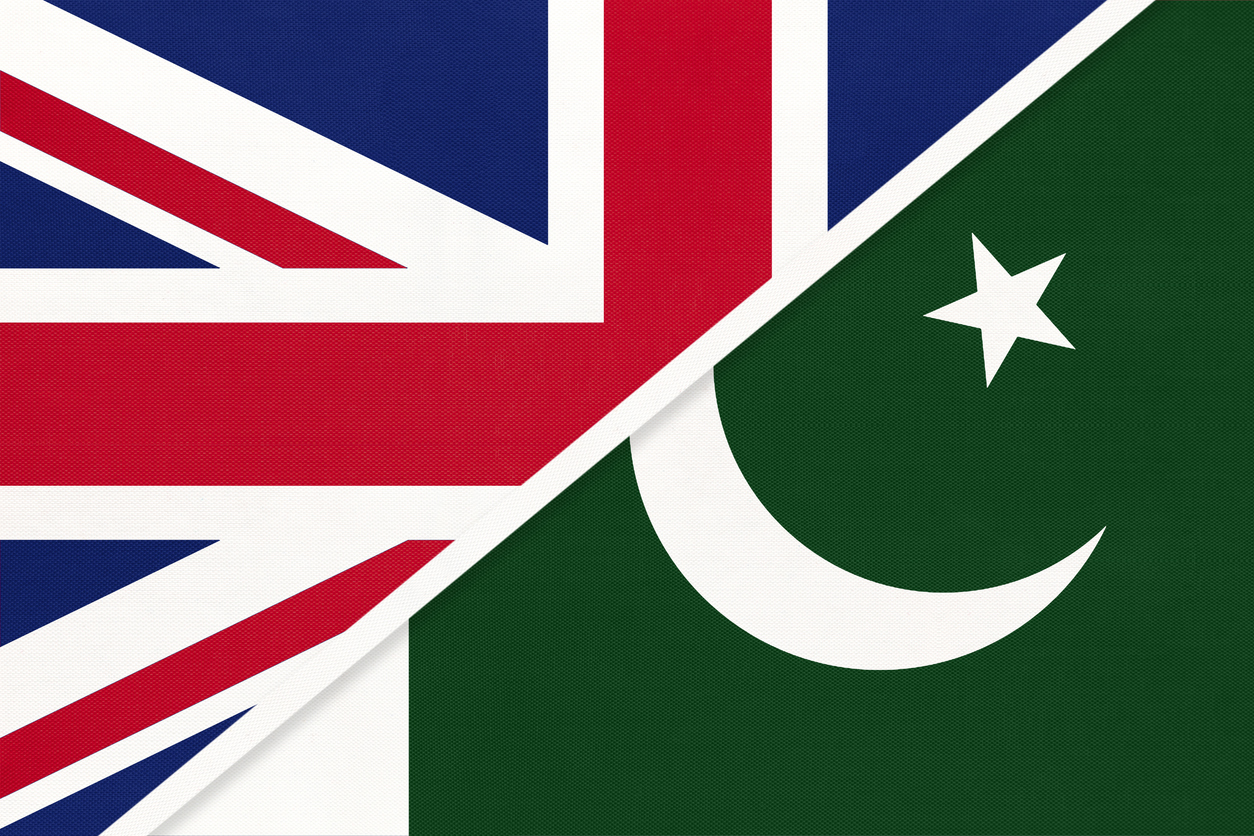
The recent meeting between Pakistan’s Deputy Prime Minister and Foreign Minister Senator Muhammad Ishaq Dar and the United Kingdom’s High Commissioner Jane Marriott marks a renewed momentum in Pakistan–UK relations. Held in Islamabad, the meeting was more than a routine diplomatic exchange — it symbolized a fresh phase of mutual engagement built upon shared interests, economic cooperation, and evolving geopolitical realities.
At a time when global politics is witnessing profound shifts, both Islamabad and London appear committed to transforming their long-standing partnership into a more dynamic and strategic relationship. Senator Ishaq Dar’s remarks praising the “positive momentum” in bilateral relations and “recent high-level engagements” reflect a growing convergence of priorities that go beyond traditional diplomacy.
The Pakistan–UK relationship carries deep historical, cultural, and economic roots. Over 1.6 million people of Pakistani origin reside in the United Kingdom, forming one of the most vibrant and influential diaspora communities in Europe. This community not only strengthens people-to-people ties but also serves as a bridge between the two nations in trade, education, and culture. However, what distinguishes the current phase of engagement is its forward-looking nature. Both governments now seek to redefine their relationship in the context of 21st-century realities — focusing on trade liberalization, climate cooperation, counterterrorism, and global governance. Senator Ishaq Dar’s meeting with High Commissioner Jane Marriott underscored precisely this recalibration: an effort to translate goodwill into actionable cooperation. The discussion reportedly covered regional and global developments, reaffirming a shared desire to enhance collaboration in “diverse areas.” This signals a broadening of the bilateral agenda — from diplomacy and defence to digital innovation, education, and investment.
Economic partnership remains the cornerstone of Pakistan–UK relations. Following the UK’s exit from the European Union, London has sought to expand trade ties with developing economies under its Developing Countries Trading Scheme (DCTS). Pakistan, as one of its key beneficiaries, enjoys duty-free access for a wide range of exports — a vital boost for its textile and agriculture sectors. Senator Ishaq Dar, who has long championed economic diplomacy, views this as an opportunity to attract British investment in Pakistan’s emerging sectors — from renewable energy and information technology to infrastructure and financial services. As Pakistan works to stabilize its economy and pursue sustainable growth, the UK’s expertise in governance, green financing, and education could play a crucial role in its transformation.
Moreover, Pakistan’s participation in the upcoming UK–Pakistan Trade and Investment Dialogue could further institutionalize economic cooperation. The dialogue aims to identify new investment opportunities, address market access barriers, and explore joint ventures that can enhance Pakistan’s export competitiveness.
Beyond trade, the evolving security environment in South Asia demands closer coordination between Islamabad and London. The post-withdrawal situation in Afghanistan, the reemergence of cross-border militancy, and regional instability have compelled both countries to intensify consultations. The UK, as a permanent member of the UN Security Council and a major voice in global governance, recognizes Pakistan’s critical role in ensuring regional peace and stability. Islamabad, in turn, sees London as a valuable partner capable of supporting its efforts in counterterrorism, border management, and humanitarian engagement in Afghanistan.
Another vital pillar of the Pakistan–UK relationship lies in educational and cultural collaboration. The UK remains one of the top destinations for Pakistani students, with more than 30,000 studying there annually. Programs like the Chevening Scholarships and British Council partnerships have helped cultivate a generation of Pakistani leaders equipped with global skills and networks. In recent years, the focus has shifted toward institutional partnerships — encouraging linkages between Pakistani and British universities, vocational training institutions, and research centres. This aligns with Pakistan’s vision of youth empowerment and innovation-led development. As Senator Dar emphasized, continued collaboration in education, climate resilience, and digital transformation could add new dimensions to the relationship, ensuring that it benefits not just governments but societies at large.
The renewed engagement between Islamabad and London comes at a time when both countries face internal and external challenges. Pakistan is striving to consolidate economic recovery, strengthen democratic institutions, and ensure border security, while the UK seeks to redefine its global role in a post-Brexit world. In this environment, the Pakistan–UK partnership can serve as a model of pragmatic cooperation — rooted in shared history but guided by mutual benefit and respect for sovereignty. The current dialogue reflects a deliberate shift away from symbolic diplomacy toward practical collaboration.
Senator Ishaq Dar’s reaffirmation of “positive momentum” in Pakistan–UK ties encapsulates a larger reality: both nations are ready to move beyond nostalgia and engage with the future. The commitment to deepening cooperation across diverse fields — from trade and security to education and green development — demonstrates that the relationship is not just enduring, but evolving.