
India’s recent shift toward nuclear assertiveness is neither accidental nor isolated—it is the culmination of a long-term ambition to project itself as a global power through military and nuclear expansion. General Anil Chauhan’s latest remarks on radiological preparedness and nuclear threat readiness are more than routine defense posturing—they reflect a deliberate effort to normalize nuclear war planning within India’s national security discourse. His statement that India “will not be deterred by nuclear blackmail” not only echoes Cold War-era bravado but also signals a dangerous erosion of restraint in one of the world’s most volatile regions.
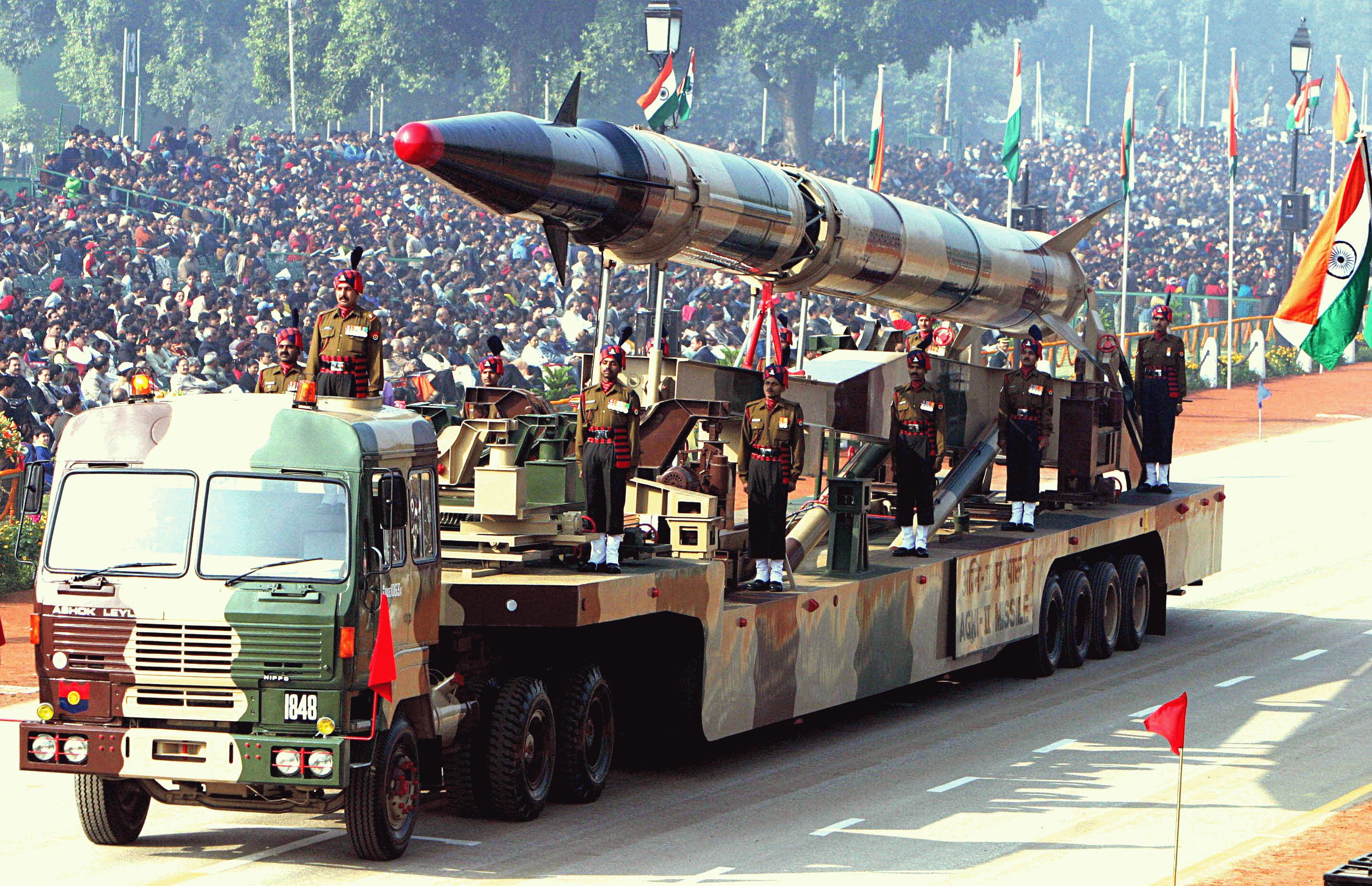
India’s nuclear posture has undergone a quiet but steady transformation. Once anchored in the principle of “credible minimum deterrence,” it now increasingly mirrors the aggressive modernization drives of established nuclear powers. According to the Stockholm International Peace Research Institute (SIPRI 2025), India now possesses over 170 nuclear warheads—an increase of nearly 15% in just three years. More worrying, however, is the sophistication of its delivery systems: the Agni-V and Agni-P missiles extend India’s reach deep into Asia, while ongoing work on submarine-launched ballistic missiles (SLBMs) and nuclear-capable cruise missiles like Nirbhay signal a shift toward full-spectrum deterrence.
Such developments contradict India’s long-standing claim of restraint. Its pursuit of a credible second-strike capability, coupled with advances in space and cyber domains, suggests an aspiration to achieve nuclear triad parity with major powers like the United States and China. Yet, this ambition ignores a crucial reality—nuclear expansion in South Asia, unlike in the West, magnifies the risks of miscalculation and escalation rather than providing stability.
India’s entry into the global nuclear order has been facilitated by exceptionalism rather than compliance. Despite remaining outside the Nuclear Non-Proliferation Treaty (NPT), India has benefited from preferential treatment through mechanisms like the Nuclear Suppliers Group (NSG) waiver of 2008, which granted it access to civilian nuclear technology. Far from promoting restraint, this exemption emboldened India’s pursuit of nuclear legitimacy without binding commitments to disarmament.
This double standard represents a fundamental flaw in the global nonproliferation regime. While states like Pakistan and Iran face intense scrutiny and sanctions, India’s expansion is often justified as a “strategic necessity” to balance China. Such selective enforcement not only undermines the credibility of arms control mechanisms but also creates what analysts call the “disarmament deception syndrome”—a situation where a state gains global legitimacy while covertly advancing its strategic capabilities.
India’s latest partnerships—ranging from defense cooperation under the AUKUS framework to nuclear technology transfers with France and the U.S.—further dilute the spirit of nonproliferation. As these collaborations continue, they risk setting precedents that erode the moral and legal foundation of the NPT and the Comprehensive Nuclear-Test-Ban Treaty (CTBT).
For Pakistan, India’s evolving nuclear and conventional capabilities pose an existential challenge. The introduction of counterforce options, missile defense systems, and battlefield nuclear doctrines has significantly altered the deterrence equation. India’s military planners now openly discuss preemptive strikes against Pakistan’s nuclear assets—a doctrinal shift from deterrence to potential decapitation.
The destabilizing impact extends beyond South Asia. India’s expansionist tendencies—fueled by nationalism and prestige politics—threaten to upend the fragile balance of deterrence that has prevented nuclear confrontation for decades. Its attempts to integrate nuclear strategy into regional military exercises, and discussions about potential “tactical nuclear roles” for conventional units, reflect an alarming institutionalization of nuclear warfighting concepts. Moreover, India’s opaque nuclear command and control system raises concerns about safety, security, and accountability. With multiple agencies—including the Defence Research and Development Organisation (DRDO) and the Strategic Forces Command (SFC)—sharing overlapping responsibilities, questions remain about command integrity in high-pressure scenarios. The risk of unauthorized or miscalculated use cannot be dismissed.
From a global perspective, India’s posture undermines the collective efforts to achieve disarmament under the Treaty on the Prohibition of Nuclear Weapons (TPNW). It also complicates future peace initiatives in South Asia, particularly when combined with India’s rejection of third-party mediation and its confrontational stance toward neighboring states. India’s nuclear trajectory has reached a crossroads. It can continue down the path of militarized nationalism and nuclear brinkmanship—or it can embrace the mantle of responsible leadership by recommitting to restraint, transparency, and regional dialogue. Confidence-building measures, such as the reactivation of the 2007 hotline between nuclear command authorities and mutual test notifications, could help reduce the risk of accidental escalation.
General Chauhan’s remarks may appear to reflect national confidence, but they also expose a deeper insecurity—one that equates global status with nuclear might. India’s nuclear obsession, framed as deterrence, is in fact a strategic gamble with catastrophic potential. In a region already marred by mistrust, unresolved disputes, and asymmetrical warfare, the normalization of nuclear preparedness risks turning strategic deterrence into strategic disaster. Global peace depends on reversing this dangerous trajectory before nuclear ambition becomes the defining feature of South Asian security.