
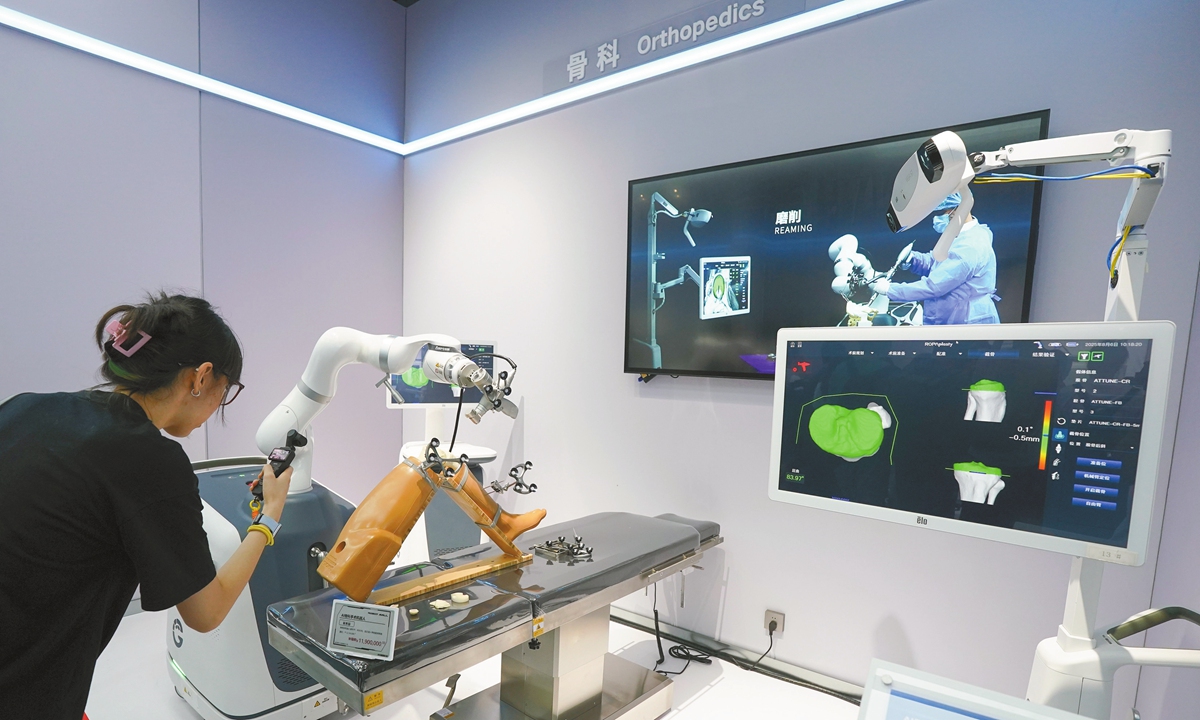
The launch of the world’s first AI-powered hospital in China has sent ripples through the global healthcare landscape, ushering in a transformative era for 21st-century medicine. More than a dazzling technological milestone, it stands as proof that with thoughtful application, artificial intelligence can revolutionize how care is delivered, diagnoses are made, and patient support is administered on a massive scale. For a region that once imported Western medical practices, Asia now leads a new wave of healthcare innovation. For Bangladesh, this moment marks a significant opportunity not just to adopt, but to lead, by crafting inclusive, culturally attuned solutions.
AI has reshaped how we communicate, how our economies run but its most transformative potential may lie in medicine, where it promises to democratize access to knowledge and clinical expertise. China has embraced this future with ambition, committing over $1.4 trillion in AI by 2030not just for automation, but to reimagine key societal institutions, beginning with healthcare.
In 2024, Tsinghua University unveiled the “Agent Hospital”a fully operational digital medical ecosystem, not a prototype but a reality. Powered by the MedAgent-Zero platform from the Institute for AI Industry Research, these AI doctors delivered astonishing diagnostic accuracy. The “Zijing AI Doctor” extended this system, deploying 42 AI specialists trained on half a million synthetic patient records, diagnosing 10,000 virtual patients with over 93% accuracy in mere days level of competence human physicians take years to reach.
These AI systems are no longer mere assistants they learn, adapt, and redefine care. The transition from simulation to real-time deployment at Beijing Tsinghua Chang Gung Hospital underscored their effectiveness, managing 1,500 inpatients and 10,000 outpatients daily while overseeing admissions, radiology, infusion, and mobile nursing.
This innovation isn’t limited to elite centers. DeepSeek AI, a powerful clinical language model, now serves 260 hospitals across nearly every Chinese province. Its architecture ensures patient privacy while equipping clinicians with real-time support for rare diseases and complex diagnoses. For Bangladesh, a nation grappling with a critical doctor shortage and fragile rural infrastructure, AI offers a breakthrough path forward.
The Bangladesh Imperative
Despite gains in public health, Bangladesh’s system remains strained. Fewer than six doctors serve every 10,000 people, with most specialists concentrated in Dhaka, leaving rural populations underserved. While digital efforts like telemedicine and e-prescriptions show promise, they remain limited in reach among 170 million citizens.
AI hospitals directly address Bangladesh’s core challenges access, affordability, and quality. AI delivers diagnostics to remote corners, independent of specialist availability. Unlike humans, AI does not tire, migrate, or require retraining it interprets radiology, analyzes labs, and flags early disease onset 24/7.
Imagine a clinic in Nilphamari where an AI system triages a patient, offers an initial diagnosis, and refers them to a Dhaka doctor via teleconsultation. Envision a Bangla-speaking AI maternal health assistant monitoring rural pregnancies and alerting nearby nurses to warning signs. These aren’t distant dreams they are within reach, provided Bangladesh adopts a just, ethical AI framework.
The question isn’t whether Bangladesh should implement AI in healthcare, but how. Grameen Trust is ideally positioned to lead this transformation.
From Microcredit to Micro-Care: The Grameen Vision
Under the leadership of Nobel Laureate Professor Muhammad Yunus, Grameen Trust has long championed the idea that socially driven enterprises can solve real-world problems without relying on charity or chasing profits. With successful ventures in microcredit, renewable energy, housing, and entrepreneurship, healthcare is the next frontier. A “Grameen AI Hospital” would not merely digitize existing models but forge a new paradigm: smart, affordable, community-rooted institutions bringing cutting-edge care to everyone not just city dwellers.
Model and Design
The Grameen AI Hospital would integrate human expertise with AI’s analytical power. Doctors and AI would work side-by-side diagnosing, treating, maintaining records, and managing emergencies. Crucially, these AI systems would be trained using local datasets to ensure clinical relevance and cultural understanding.
To widen access, mobile health units and telemedicine would link the hospital to rural areas. AI kiosks and diagnostic pods installed in existing Grameen clinics could provide instant screenings for diabetes, tuberculosis, and hypertension. Financially, a cross-subsidy model earning moderate income from urban patients to fund free rural care would ensure sustainability without relying on donations.
Strategic Partnerships
Success depends on collaboration. Internationally, partnerships with institutions like Tsinghua University’s AIR Institute and DeepSeek AI would provide access to proven models. Domestically, universities such as BUET, Dhaka University, and North South University could serve as research and training hubs.
Aligning with government bodies like the Ministry of Health, ICT Division, and Digital Bangladesh 2.0 will ensure coherence with national policy. Support from organizations like the Yunus Center, UNDP, ADB, and WHO will help incorporate best practices globally.
Building Capacity for a New Era
The future demands a new kind of healthcare professional one who partners with, not competes against, intelligent systems. Grameen Trust envisions an Institute of Health Innovation and Digital Medicine under a future Grameen University to train AI-fluent doctors, nurses, and data scientists.
Here, AI handles routine diagnostics and data interpretation, allowing human professionals to focus on nuanced, complex cases. With continuous education, simulation labs, and research residencies, Bangladesh can foster a globally competitive health workforce.
Ethics and Governance
Ethical integrity is critical. A Grameen AI Hospital would establish an independent Data and AI Ethics Board including medical professionals, technologists, ethicists, and community voicesto ensure transparency, fairness, and accountability.
Patient data must remain within national borders, secured by global encryption standards. Moreover, AI must be “explainable “medical decisions should be traceable and justifiable to both patients and regulators.
Roadmap to Realization
This transformation could unfold over four phases:
- Year One: Feasibility studies, gap analyses, infrastructure planning, partnerships, and regulatory frameworks; simulation begins with anonymized data.
- Year Two: Pilot launches of telemedicine and diagnostics, connecting rural clinics to a central AI-powered hub.
- Year Three: Full deployment across key specialties like internal medicine, pediatrics, OB-GYN, and ophthalmology.
- Years Four and Five: Expansion to a national network of clinics; AI systems evolve through continuous learning from localized data.
Challenges and Solutions
Obstacles are inevitable. Imported AI often doesn’t reflect local health realitiestraining must be localized. Trust will also be a hurdle; patients may hesitate to accept AI diagnoses or worry about data misuse. This calls for community engagement and clear ethical oversight.
Cost is another challenge, but through the Grameen social business model, revenue can be reinvested to sustain and scale operations. Resistance from healthcare workers can be mitigated through inclusive training positioning AI as a partner, not a rival.
A Bold Future Beckons
The Grameen AI Hospital could become Bangladesh’s most significant healthcare innovation since BRAC’s community clinics. It would signal the country’s shift from Digital Bangladesh to Intelligent Bangladesh where data and compassion unite to serve humanity.
By blending AI’s computational power with Grameen’s values of equity and social entrepreneurship, Bangladesh can offer the world a transformative model: innovation fused with empathy, technology with integrity, and access with dignity.
As Professor Yunus reminds us,
“Technology must serve humanity not the other way around.”
That belief makes the Grameen AI Hospital not just plausible, but inevitable. Yunus has redefined what’s possible turning microcredit into a global force, reshaping how we think about business and social change. Now, with the same clarity, courage, and compassion, he and his team can redefine healthcare where no one is denied quality care due to income or geography.
The road ahead is complex but illuminated by the same hope that built Grameen: when innovation meets humanity, the impossible becomes profoundly possible.