
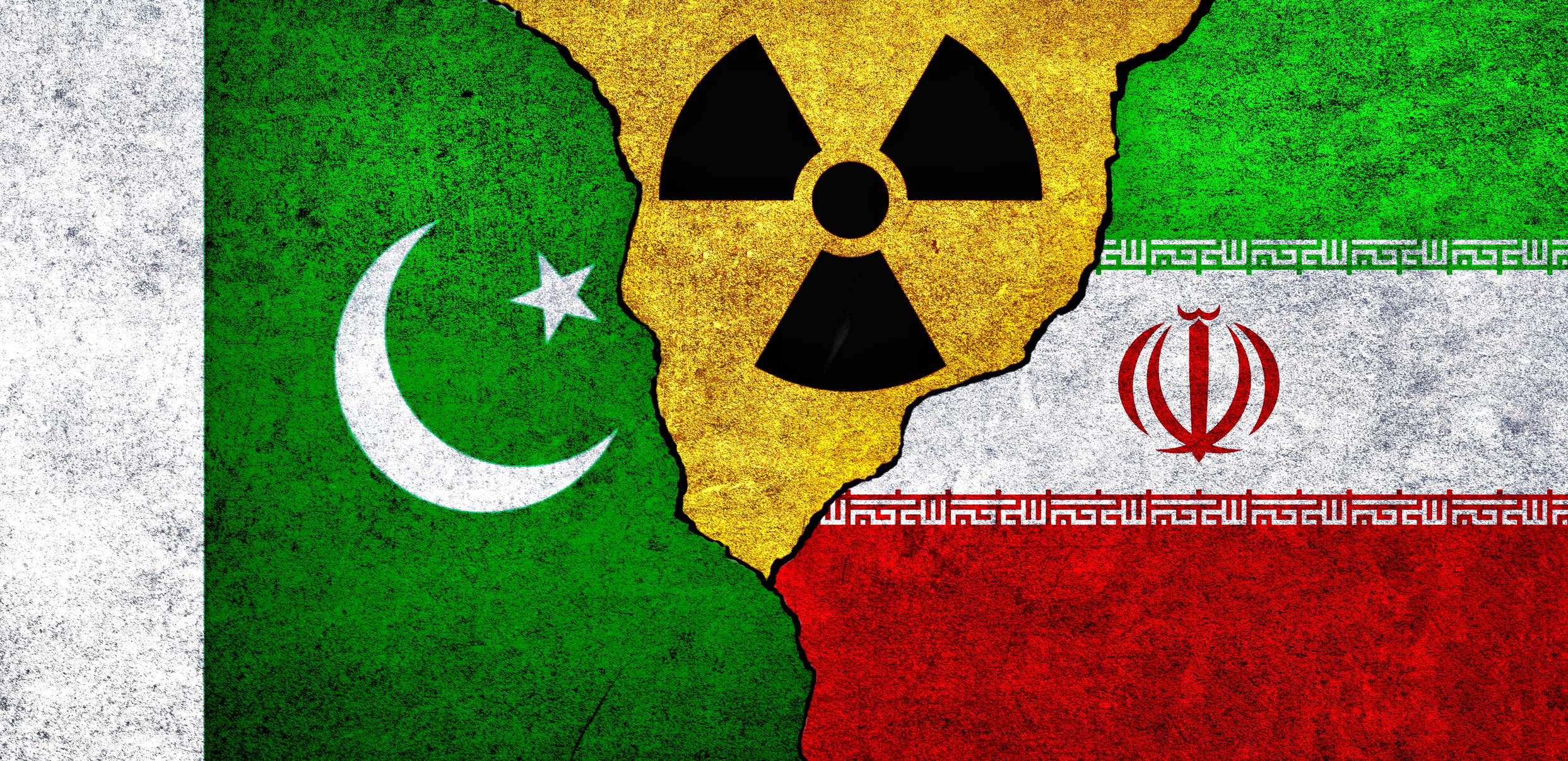
President Donald Trump`s decision to resume nuclear weapons testing marks a significant shift in the US policy and global arms control dynamics. While speaking about the resumption of nuclear weapons testing by the US, President Trump also claimed that a few countries, including Pakistan, have been testing nuclear weapons. Though Pakistan is not bound under any non-proliferation related treaty, Pakistan has been observing a unilateral moratorium on nuclear testing. Islamabad has constantly maintained and officially announced that it will not be the first in South Asia to resume nuclear testing. Pakistan imposed a unilateral moratorium after its 1998 tests and has repeated, in plain language, that it “was not the first to test and will not be the first to resume testing in South Asia.” The Director General Inter-Services Public Relations (DG ISPR) Lieutenant General Ahmed Sharif Chaudhry also clearly stated this in his latest press conference and emphasized the continuation of the tests and trails as if required for national security. His statement is as follows: “The strategy of any country is fluid and always kept under abeyance, and we are not bound to make such moves public.”
There are good strategic reasons for this restraint. First, the moratorium helps preserve crisis stability in a region where even conventional incidents can escalate quickly. After 1998, both India and Pakistan announced unilateral test bans. Despite periodic spikes in tension, the non-testing norm has held for over two decades. In 1988, a bilateral pact, Agreement on Prohibition of Attacks against Nuclear Installations and Facilities was signed between India and Pakistan, under that each on the 1st January of every year, the two countries exchange lists of nuclear facilities. This was a small but meaningful confidence-building measure that survives political cycles precisely because it lowers risks on the worst day, not just the best.
Second, Pakistan’s stance aligns with global arms-control objectives without being naive or compromising deterrence. The Comprehensive Nuclear-Test-Ban Treaty (CTBT) has not entered into force because key states, including the US and China, have not ratified, though signed it. Yet a robust global moratorium functions in practice as a powerful brake on new-testing cascades. When great powers chip away at that norm the signal to other regions is corrosive. The most glaring example is Russia who de-ratified the CTBT in 2023. It can be argued that South Asia would be among the first to feel the shockwaves.
Third, Islamabad has coupled this restraint with diplomacy. Pakistani officials have repeatedly offered a practical step that would lock in stability gains without prejudging broader disputes through translating the unilateral moratorium into a bilateral non-testing agreement with India. This offer was noted by the Arms Control Association (ACA) as a standing feature of Pakistan’s nuclear policy. Pakistan has repeated similar messages in multilateral forums and in direct discussions with Washington. Hence, the combination of the restraint plus proposals, is the opposite of brinkmanship.
Analysts also respond on the abstention of the tests and criticize that it is meaningless if it comes alongside continued missile development. Two points matter here. One, the missile advancements and delivery-systems research should not be confused/conflate with the resumption of nuclear explosive testing. Those are separate activities with distinct purposes and policies. Two, banning nuclear tests restricts countries from conducting the most dangerous steps that is exploding weapons to make them stronger or to send political messages and military signalling. These are the exact reasons that why non-testing is worth defending even when other competitive dynamics persist. Resuming nuclear tests would erode one of the few arms-control norms still restraining an already tense era. The CTBT’s legal fate may be uncertain, but the political taboo against testing remains valuable, yet fragile.
There are three practical implications suggested for policy maker to consider. First, Islamabad should keep restating its moratorium in every high-level communiqué and at multilateral forums as it does so, linking it to a standing offer for a formal bilateral non-testing pact with India. Second, partners including the US and China should encourage parallel restraint in New Delhi. The stability dividend only compounds when both sides are visibly committed. Third, media narratives need to be sophisticated enough in distinguish between test bans and other defence programs, so it will not collapse them into a single “threat” frame risks normalizing the very tests everyone says they want to avoid.
To conclude, Pakistan’s pledge not to be the first to resume nuclear testing in South Asia is a measured, interest-based choice for regional stability It reduces risks in the region. Thus, Pakistan was not the first to carry out nuclear tests and will not be the first to resume them. India was the first to nuclearize South Asia and the first to nuclearize the Indian Ocean Region (IOR). Pakistan had no option, but to follow suit for deterrence purposes.