
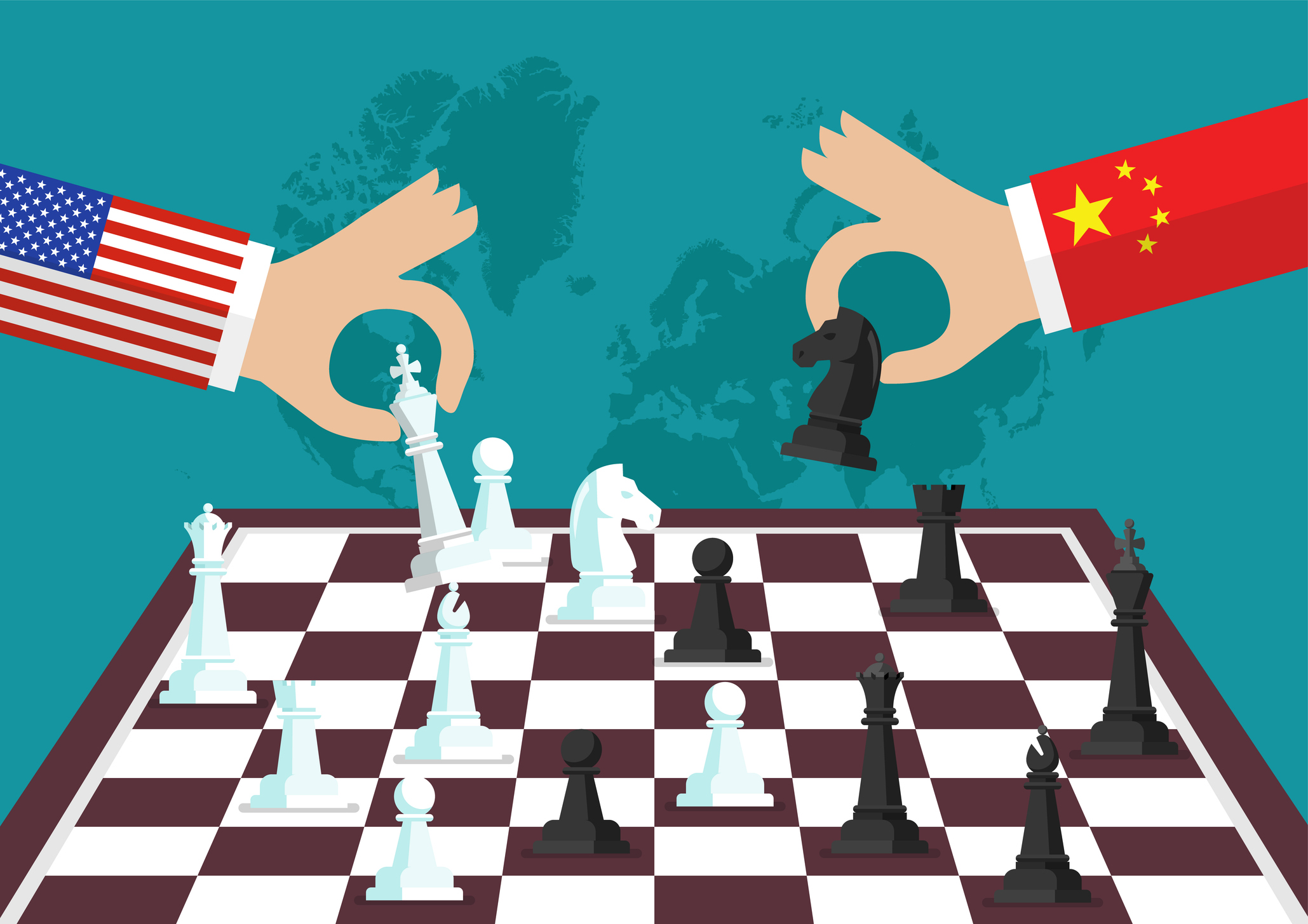
The extent of vanishing of the China threat and emerging bonhomie between the US and China during this Trump administration is perceptible from its cavalier approach to transfer of technology to China, a slipshod perspective on the Indo-Pacific region and damage to international norms and disparaging of international organisations including the UN that has placed China in a formidably advantageous position to fill the strategic vacuum.
While China continued to be on the top of the preceding administrations’ including the first Trump administration’s primary security focus, the incumbent administration seeks to make profits from all engagements even as those included compromising of national security concerns. For example, in August this year, the administration has brokered a revenue-sharing deal with Nvidia allowing the US company producing semiconductor chips to sell its H20 chip to China. As per the terms of the deal, the government has a share of 15 percent of revenue from the sales of the company in exchange for its granting of export control licenses.
In sharp contrast to the first Trump administration’s expressed concerns that Huwai and TikTok could give the Chinese government access to American data, the second Trump administration does not seem to be careful about the downsides of the transfer of technology to China. It has also reached a deal with technology company, AMD to share 15 percent of its revenue from selling its MI308 processors to China. In fact, the current administration appears comfortable in trading away national security concerns for financial gains.
Indo-Pacific Strategy
The US policies over trade under the Trump administration have driven India closer to the Chinese sphere of influence even while unlike China, India does not share the objective of pursuing for a world order defined by a sharply declined role of the US.
The bilateral relations between India and China took a nosedive in 2020 amid the confrontation between the two armies in Galwan heights. However, since then both the countries have been making concerted efforts at managing their border by seeking to build mutual confidence and bringing predictability to their actions. Nevertheless, the Trump administration’s unmitigated bludgeoning of India through tariffs and befriending of Pakistan at diplomatic level while maintaining a soft posture against China changed India’s strategic calculus and pushed it to improve ties with China deeper into the border as a hedging strategy against unpredictable Trump administration.
Since tariffs have been imposed on India, Indian and Chinese leaders have not only frequently visited each other’s countries, they have developed certain levels of warmth in bilateral relations. Chinese Foreign Minister Wang Yi travelled New Delhi in August this year. India sent its defense minister, external affairs minister and national security adviser to China for various meetings this year in support of Beijing’s presidency of Shanghai Cooperation Organisation (SCO). The American harsh measures against India expedited the improvement in bilateral relations despite strong reservations between the two in certain areas. Both these countries agreed to take steps towards civil society exchanges, resume direct flights between them and India has agreed to issue visas for Chinese tourists and China has also agreed to restore access for Indians to the pilgrimage of Kailash Mansarovar.
Business establishments within India that support robust trade and larger investment flows between India and China have been able to extend their sway against those who favour trade and investment with the US. However, there are clear limits to viability of such proposals for seamless trade and investment flows apart from rising trade deficit suffered by India. India and China do not share enough trust to allow inflows of sensitive technologies from either side. India has officially clarified that it has not lent support to China’s claim of sovereignty over Taiwan. Both countries have not withdrawn their forces to pre-2020 positions despite normalisation efforts to stabilize the border continue. India has not accepted the Chinese sovereignty over the South China Sea and it has recently conducted joint naval drills with the Philippines.
Much like the US, security concerns pertaining to stealing of data propelled India to exclude Chinese companies from its 5G network and ban apps such as TikTok. However, considering the warming of bilateral relations, India is likely to invite more Chinese investment in different areas may be in the forms of joint ventures so that local companies would receive technical assistance and technology from their Chinese counterparts.
However, the extent of cooperation in the field of technology still remains to be seen as China has restricted export of rare-earth magnets, fertilizers and tunnel- boring machines including travel of technical experts to India in 2024 and 2025. The unresolved territory and distrust rooted in mutual adversarial relationships cast doubts on how much India and China would accommodate each other.
In May this year, China’s backstage collusion with Pakistan during the latter’s military face-off with India and assistance with real time intelligence operations still raise questions over the depth of India-China relations when Beijing continues to supply critical military equipment to Pakistan.
Trilateral meetings between the leaders of India, China and Russia have not been revived by India since 2019 and India’s Prime Minister Narendra Modi did not attend the Chinese President Xi Jinping’s victory parade in Beijing. It was India’s External Affairs Minister S.Jaishankar who participated in Brazil’s emergency virtual BRICS summit to discuss US tariffs instead of Modi unlike Xi and Putin who participated.
China wants to cultivate India’s support for its ‘One China Policy’ and its Belt and Road Initiative (BRI) which India is unlikely to yield for now given the unresolved boundary issue with the former and long years of China-Pakistan bonhomie. If the Trump administration continues to press and alienate India over trade, investment and migration issues, India-China relations may cross the security threshold where India might have to compromise over certain issues with China to secure its support to hedge against the US. If that level of relationship is cultivated between the two, it will upend the American Indo-Pacific strategy and China will emerge as an unchallenged power in the East. India’s Prime Minister Modi still sees a window of opportunity to improve bilateral relations with the US when he publicly appreciated President Trump’s Gaza Peace Plan in social media. The Indo-Pacific strategy suggests that India and US have more shared interests than those between India and China. Once that understanding fails to convince the US then the entire gamut of India’s strategic calculation gets awry.
The Global Stage
While the Trump administration scoured Brazil and India through massive tariffs, Xi addressed the virtual BRICS meeting hosted by Brazil on the theme ‘resisting protectionism’ and welcomed Modi to China. Beijing announced cuts to Chinese tariffs on African goods in June while most of the developing countries are reeling under the American economic coercion. While the Trump administration has titled its AI action plan “Winning the Race” smacking of US nationalism over cutting-edge technology, China has hosted its Annual AI conference titled ‘Global Solidarity in the AI era’ to demonstrate its intention to share the benefits of AI with global community. Similarly, while the Trump administration has shown no interest in the fact of climate change and even criticized the UN for its inability to address American security concerns, China has demonstrated tangible interest in reducing carbon emissions and sought to strengthen the UN through its plan of Global Governance Initiative.