
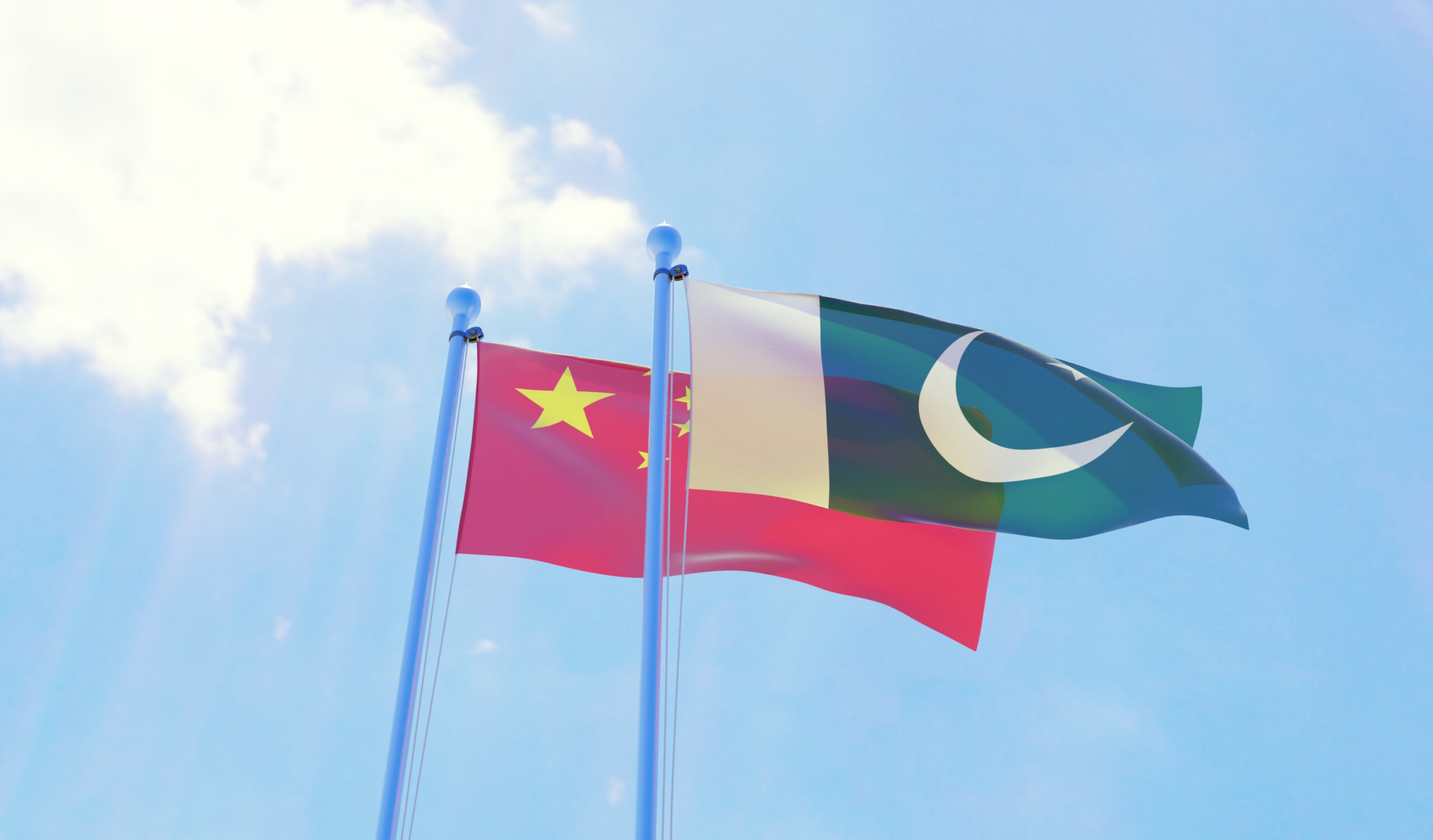
A significant change in their long-standing relationship, which has been characterised by steel and concrete, was made this week when China and Pakistan signed a new round of cooperation agreements covering everything from media collaboration to intelligent transport robotics and clean water systems. With its tall ports along the Arabian Sea, its highways cutting through the Karakoram, and its power projects illuminating once-darkened cities, the China-Pakistan Economic Corridor had represented an era of grand infrastructure for 20 years. However, as the global economy shifts more and more towards technology, sustainability, and creative exchange, the two countries are quietly rewriting their history to replace asphalt bridges with innovative ones.
This new chapter of partnership reflects a change in priorities. It would seem that Islamabad and Beijing are conscious that while roads and power grids lay the bedrock for growth, human and technological capacity keeps such growth going. The agreements this week reflect a conscious shift-from the hard infrastructure of the first phase of CPEC toward a softer, smarter model of collaboration on resilience, imagination, and knowledge-sharing.
This is typified by the Clean Water Initiative in Sindh, powered by the Chinese environmental firm Lucion. It is at once pragmatic and visionary for a country whose lack of access to safe drinking water comprises part of its most serious public health concerns. The treatment of sewage and seawater desalination, together with bottling mineral water, shows that technology surmounts scarcity in ways traditional aid never could. For Pakistan, where waterborne diseases and supply shortages cripple everything from its urban centers to its rural communities, this is more than an import of technology-it is a test case for self-sufficiency.
Besides the ecological relevance of the project, there is more in it for both China and Pak-that is to say, a movement in progress away from dependency through partnership. This is no more about loans or large-scale construction; now it’s about problem-solving. Thus, the institutional learning that the Chinese expertise in green innovation brought to Pakistan allowed this country to push further on and master sustainable urban management on its own terms.
Introduction of robotics and automation through the transport robotics program mooted by a Shanghai-based company could provide an equally transformational impact the use of service robots in hospitals, hotels, and airports may sound futuristic for the developing economy but very thought-provoking. They promise efficiency and cost reduction, but more importantly, push Pakistan into the global conversation of smart logistics and artificial intelligence. Opening completely new avenues for employment and innovation is the prospect of training the local workforce in robotics maintenance, AI design, and machine learning.
Senator Saleem Mandviwalla, while signing, said, “These initiatives constitute learning from China’s smart technology ecosystem.” His words epitomized a strategic shift in the policymaking circle of Pakistan-that true modernization lies not in the mere adoption of technology but in the manner, it has been assimilated with governance and education. As China readies its 15th, Five-Year Plan for 2026-2030, Islamabad’s efforts at aligning with Beijing’s innovation-driven roadmap may help bridge gaps in skills, research, and industry that have long held back Pakistan’s economic promise. But this changing dynamic is not restricted to laboratories and industrial parks; the cultural element-so often lost in the din of trade and investment-related discussion-started assuming its rightful place front and center.
Now, films are crossing borders in a way that feels pretty remarkable. China’s Ne Zha 2 finally hits screens in Pakistan, while The Legend of Maula Jatt draws crowds in China. It’s a subtle shift, but it says a lot about how people in both countries are getting curious about each other. Instead of just politicians trading speeches and shaking hands, you’ve got entire societies sharing stories—watching movies, finding common ground, maybe even changing their minds about one another. That’s something economic deals just can’t do. Films and art make things personal. They invite empathy, and suddenly, two very different worlds don’t seem so far apart after all. With the new China-Pakistan Asia-Africa Economic and Trade Cooperation Promotion Association, this kind of cultural exchange is only picking up speed.
On top of that, this platform shines a light on the creative industries—film, media, digital content—as real tools of influence. These days, stories carry as much weight as goods or cash. Behind all this cultural back-and-forth, you can spot some hopeful signs in Pakistan’s economy. Inflation, which used to be a constant headache, is finally dropping below 10%. The stock market keeps breaking records. Investors are showing fresh confidence in energy, banking, and manufacturing. Sure, it’s still fragile. But at least there’s a glimmer of stability, and that’s the foundation you need for any real partnership—whether it’s tech or culture. Still, nobody’s getting carried away. As Pakistan welcomes more Chinese tech and know-how, new questions pop up. Transparency, data privacy, environmental rules—you can’t ignore those. Optimism is good, but keeping your eyes open matters even more.
In a country which will open its doors wide to technology and know-how from China, considerations of transparency, data sovereignty, and environmental standards become acutely relevant. The country’s regulatory institutions will have to hasten their pace to keep up with the speed at which innovation is not running ahead of governance. China’s own developmental experience is inspiration and caution in equal measure-progress born of ambition, but sometimes shadowed by overexpansion and incomplete oversight.
Meanwhile, For China, this move toward softer, knowledge-driven partnerships really highlights how much the Belt and Road Initiative has grown up. The first ten years were all about roads, rails, and ports—big, obvious infrastructure. Now, the focus is shifting. Next-generation projects aren’t just about physical links; they’re about sharing ideas and culture. Beijing isn’t just bankrolling things anymore. It’s stepping up as a partner in modernization, bringing people together and making room for real exchange. Pakistan’s seeing the impact up close. Clean water is reaching Sindh, robots are helping out at Karachi’s airport, and films are showing in both Beijing and Lahore. Each change might look small on its own, but together they point to something deeper—a shift from dependency to real strength, from copying to creating.