
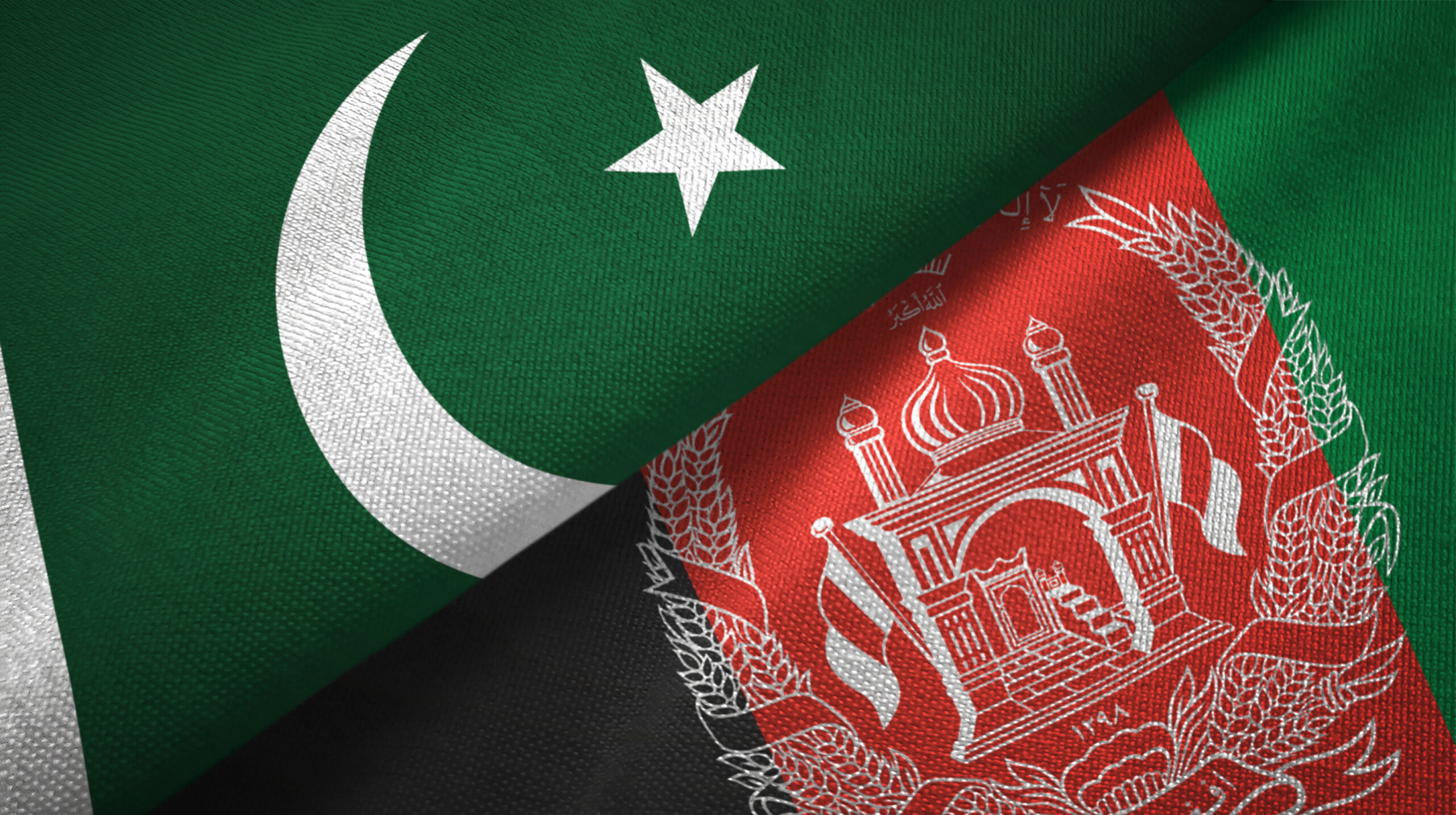
Different individuals may look at the triggers of the possibility of the breaking of the ceasefire between the Taliban and Pakistan. One set of reasons for the emergence of war between two nations is the domestic reasons. Besides others, the scapegoat theory, or diversionary theory, connects domestic factors with the emergence of war between two states. The theory holds that states engage in battle with other states to divert their citizens’ attention from internal issues.
This theory is rooted in Georg Simmel’s proposed sociological explanation. He argues that clashes with external groups tend to strengthen unity and consolidate political authority within the in-group. Extending this logic to the realm of international relations, he suggested that war against an outside adversary can serve as a final means for a state suffering from internal divisions to resolve those conflicts—or, failing that, to disintegrate entirely. Based on the diversionary theory, I argue in this article that the ceasefire between the Taliban and Pakistan is doomed to collapse.
Although the recent talks between the Taliban and Pakistan resulted in no deal, even if both sides reach an agreement, the probability of a lasting peace between the two sides seems bleak.
Before this, with the mediation of Qatar and Turkey, the Taliban and Pakistan agreed to a ceasefire in Doha, Qatar. Both sides agreed to extend the 48-hour temporary ceasefire, which was decided upon after five-day skirmishes along the Durand Line that were triggered by Pakistan’s surgical strikes in Afghanistan.
The changing political postures on both sides indicate that the ceasefire will not be permanent. The recent armed tussles started with Pakistan’s aerial attack on a vehicle inside Kabul on October 8th. Pakistan claimed to have killed TTP’s(Tahreek-e-Taliban Pakistan) head, Noor Wali Mehsud. Nevertheless, the claim proved false when Mehsud, in a video apparently recorded in a hilly area of Khyber Pakhtunkhwa, said he was alive and active on the Pakistani side of the Durand Line. Pakistan’s surgical strike coincided with the Taliban’s Foreign Minister, Mula Amir Khan Muttaqi’s six-day visit to India. The next day, the Taliban targeted Pakistan’s check posts along the Durand Line. The skirmishes between the Taliban and Pakistan ensued for five days. This was coupled with heavy propaganda by Pakistan, blaming India for the fighting.
The Taliban-Pakistan fighting happened at a time when Pakistan was suffering from an intense internal political strife, financial crisis, and instability. The political wrestling between the provincial government of Khyber Pakhtunkhwa and the federal government reflects Pakistan’s political instability. Because the new chief minister and his Pakistan Tehreek-e-Insaf party oppose the military operation in Khyber Pakhtunkhwa. The federal government in Pakistan initially opposed the election of the Chief Minister of Khyber Pakhtunkhwa. While many such operations in the past have failed to achieve their goals, the Pakistani army establishment considers such an operation vital for eradicating the TTP. Although the new chief minister has been sworn in, differences between the Khyber Pakhtunkhwa and the federal government persist.
Added to this is the political instability on the federal level. A loose coalition in the federal government rules the country. The blame game and heated exchanges between the two main coalition parties, Pakistan Muslim League (N) under the leadership of the prime minister, Shabaz Sharif, and the Pakistan People’s Party under the leadership of the President Zardari, have become a daily occurrence. The coalition members criticize the prime minister from time to time over the economic crisis, rising instability, and political unrest. Ordinary people face high unemployment and massive inflation.
Simultaneously with the war with Afghanistan, a political cum religious party (Tahreek-e-Labbaik) took to the streets in Lahore and staged massive demonstrations on October 10. The protest was heavily handed and caused dozens of casualties among the police and the movement’s members.
This is on top of the TTP and Baluch Liberation Army’s attacks against the Pakistani security forces in many parts of Khyber Pakhtunkhwa and Baluchistan almost daily. TTP has established a shadow government in many parts of the former Federally Administered Tribal Areas, which are under the administration of Khyber Pakhtunkhwa. Between 2021 and 2024, there was a sharp rise in the number of violent events involving the Tehrik-i-Taliban Pakistan (TTP) and Pakistani security forces. Tahir and Jadoon (2025) have painted a grim picture of the casualties caused by the TTP’s tussles with the Pakistani security forces. They have recorded data on confrontations (battles) at 98 in 2021, rising to 121 in 2022, surging to 374 in 2023, and further rising to approximately 470 in 2024. Meanwhile, indirect violent actions against civilians and non-state targets, including bombings and remote attacks, also climbed similarly: from 26 events in 2021, to 32 in 2022, then a larger jump to 165 in 2023, and 247 in 2024. This escalation reflects the growing intensity and frequency of TTP’s campaign against Pakistan over these years.
Pakistan blames the Taliban for giving shelter to the TTP in Afghanistan. However, the Taliban deny this allegation and consider TTP as Pakistan’s internal issue.
Since 1973, Pakistan has supported all wars in Afghanistan in the disguise of religion. It was the Pakistani religious schools and religious leaders who served as a religious authoritative source for their proxy wars in Afghanistan and Kashmir for many decades. However, with Muttaqi’s trip to the Deoband religious school and the warm reception he received there, Pakistan’s religious leverage seems to have loosened. Pakistan cannot afford to lose its religious legitimacy. It has to have religious legitimacy to maintain leverage, both within and outside its neighborhood, to address security threats.
This has further weakened the Pakistani religious leaders’ leverage in Afghanistan. Any mediation by Pakistani religious parties might not help materialize a prolonged ceasefire between the two sides. These leaders, particularly Molana Fazal Rahman, do not fully endorse Pakistan’s current Afghan policy, and his influence has considerably waned.
In addition, Pakistan’s Chief of Army Staff’s tenure should have technically ended next month. While his tenure was extended through a legal amendment, there is still unrest in some political circles over the extension. These circles want the tenure of the Chief of Army Staff to end in November.
. Many Pakistani prime ministers in the past have had their governments dismissed due to their tussle with the mighty army of Pakistan. The former Pakistani Chief of Army Staff, Musharraf’s coup against the then-prime minister Nawaz Sharif, is an example of this. While some major political parties oppose extending the current Chief of Army Staff in Pakistan, the perception of an intense external threat could justify and legitimize such an extension.
More importantly, Pakistan heavily blamed Mutaqi’s trip to India for the armed tussle between the Taliban and Pakistan. Rooted in Pakistan’s struggle for strategic depth in Afghanistan, Pakistan is and always has been opposed to a cordial relationship between India and Afghanistan. Despite such opposition, it seems that the Taliban will strive to act as a state and continue to strengthen their ties with India and other states.
To keep realism aside from this equation, I think the diversionary theory explains the current possibility of war between the Taliban and Pakistan. When facing internal economic difficulties, political unrest, or social discontent, governing elites may deliberately adopt aggressive foreign policies or even provoke armed conflict abroad as a means to shift public attention away from domestic troubles and to strengthen their political standing at home(Levy, 1989).
Given Pakistan’s current political, military, and economic posture, it is less likely that we will see a long-lasting ceasefire along the Durand Line. We will continue to see the clouds of war hovering on the horizon of the Durand Line. It appears that the diversionary theory of political science will get momentum once again.